💡 Pimdee’s Core Principles for Characters That Pop
These are the game-changing insights from 2D Artist Pimdee that shift your character creation from guesswork to a structured, repeatable process.
1. Master Form Construction Before the Final Pose
It’s tempting to jump straight into dynamic gestures, but Pimdee emphasizes building a solid foundation first. The key is to break down figures into simple, understandable forms.
- Method: Revisit 3-5 previous gesture exercises. Now, rebuild those poses using simplified geometric shapes (spheres, cylinders, cubes). This isn’t about drawing them perfectly; it’s about understanding how forms connect and support each other, even in complex movements. This exercise, as detailed in the course, builds the underlying structure that makes dynamic poses believable.
- Insight: This isn’t just about anatomy; it’s about developing an intuitive understanding of volume and weight. When you can confidently construct a character from basic shapes, any pose becomes achievable because the underlying structure is sound.
2. Leverage Shape Language for Instant Readability
Characters need to communicate personality and intent instantly. Pimdee teaches how to achieve this through deliberate shape design and strong silhouettes.
- Method: When designing outfits or refining character shapes, analyze your references not just for detail, but for their core shapes. Are you aiming for a sharp, aggressive character? Use angular shapes. A friendly, approachable one? Lean into curves. Thumbnailing poses with an emphasis on bold silhouettes, as demonstrated in the course, ensures your character’s core identity is clear even at a glance.
- Workflow Hack: Before even sketching a detailed character, spend time creating silhouette studies. This forces you to focus on the overall form and impact, cutting down on time spent on details that might be lost later.
3. The Grayscale Rendering “Secret Sauce” for Volume
Many artists struggle with rendering because they jump straight to color, missing crucial understanding of form and light. Pimdee’s approach uses grayscale to build solid volume first.
- Method: After sketching and refining your character’s form and outfit, render the entire piece in grayscale. Focus on establishing a clear light source and how it interacts with the forms, creating strong value contrasts. This exercise, a core part of the course’s detailed demos, teaches you to “see” the volume before adding color.
- Finishing Detail: This grayscale pass ensures that when you introduce color, you’re layering it onto a foundation that already possesses depth and form. It’s about making your character feel physically present, not just a flat illustration.
🛠️ Key Skills & Details That Define Professional Quality
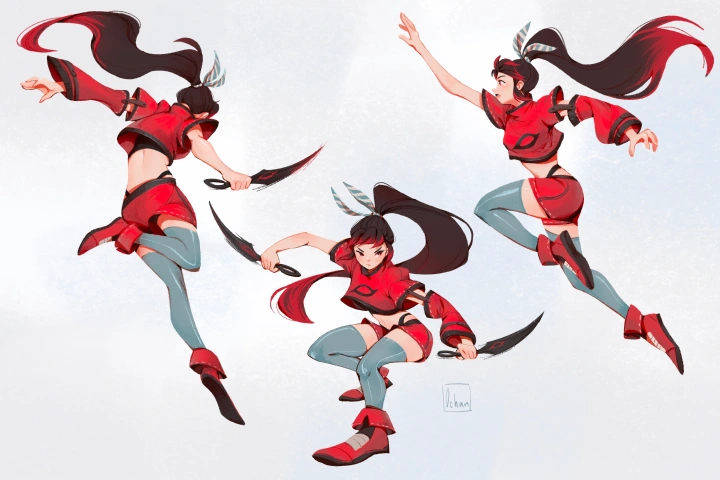
The difference between a good character and a great one often lies in the meticulous application of professional techniques. Pimdee’s course breaks down how to achieve that polish through structured exercises and industry-tested methods.
- Dynamic Pose Construction: Learn to rebuild gesture drawings using simplified forms, ensuring believable weight distribution and natural flow. This structured approach to figure construction allows for confident exploration of movement.
- Intentional Shape Design: Discover how to use geometric shapes and thoughtful perspective to build your character’s body and outfit, making them instantly recognizable and visually compelling.
- Volume Through Value: Master the fundamentals of lighting and shading by working in grayscale. This ensures your characters have a strong sense of three-dimensionality and presence.
- Stylized Rendering: Move beyond flat colors. Learn to apply lighting, color, and rendering techniques that enhance mood, materials, and the overall professional finish of your illustrations. This includes understanding how to approach different materials with clarity.
💬 Frequently Asked Questions
Q. As a 2D Artist, how can I ensure my character’s poses look dynamic and not stiff?
A. The core principle taught by 2D Artist Pimdee is to build a strong foundation in form construction. Start by breaking down the figure into simple geometric shapes and rebuilding poses with these forms. This ensures the underlying structure supports the dynamic movement, making the final pose feel natural and energetic rather than forced.
Q. As a 2D Artist, what’s the best way to make my character designs instantly readable and unique?
A. 2D Artist Pimdee emphasizes the power of shape language and silhouette. Focus on creating strong, recognizable silhouettes for your characters. During the design process, deliberately choose shapes – angular for sharpness, curves for softness – that communicate personality and intent. This makes your character design impactful even before details are added.
Q. As a 2D Artist, how do I improve the three-dimensional feel of my character illustrations during the rendering stage?
A. A key technique shared by 2D Artist Pimdee is the practice of grayscale rendering. By focusing solely on values and light placement in grayscale before adding color, you build a solid understanding of volume. This ensures that when you apply color, it enhances an already well-defined form, giving your character a much stronger sense of depth and presence.
👉 Want to Go Deeper?
Unlock the full potential of your character art with a structured, step-by-step guide.