Blender Character Animation: Mastering Smoke Effects for Dynamic Storytelling
🧐 When Your Effects Don’t Quite Hit the Mark
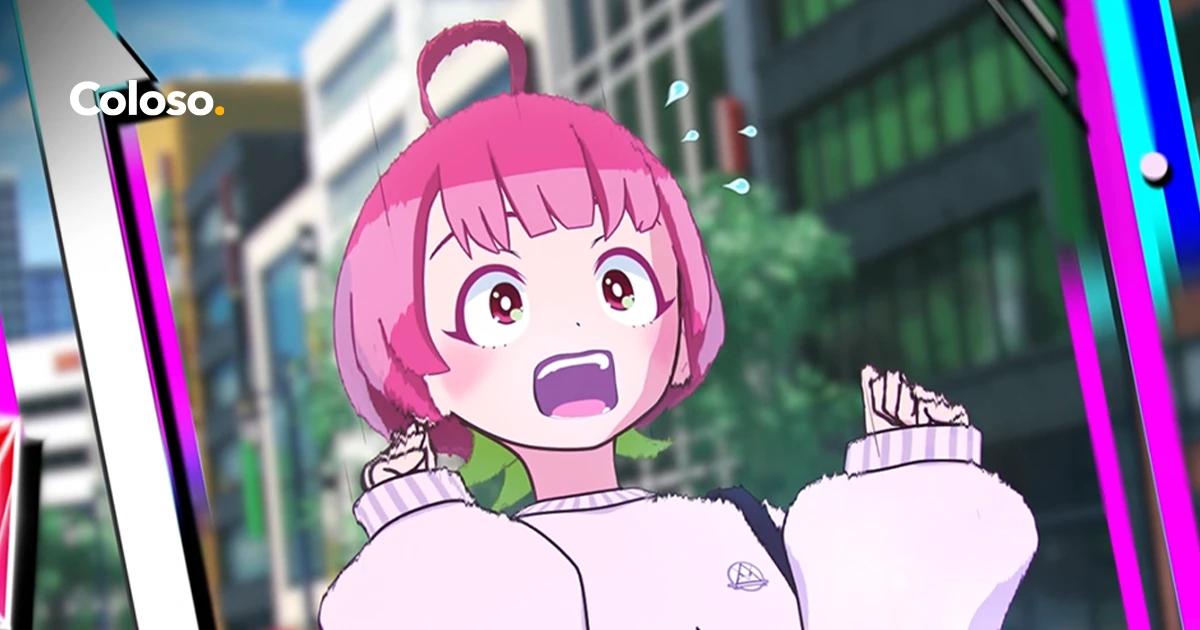 It’s common to spend hours on an animation, only to find the effects feel flat, disconnected, or simply not impactful enough. The difference between amateur and professional-level effects often comes down to a few key techniques that make the animation truly come alive, especially when character motion alone can’t convey the full story. This is where understanding the role of effects and how to implement them with precision in Blender becomes critical.
💡 Core Techniques for Professional Character Animation Effects
1. Layering Displace Modifiers for Organic Smoke
The key to achieving realistic, dynamic smoke in Blender lies in layering multiple Displace modifiers, each controlled by a different Voronoi texture and an Empty object.
- Basic Smoke Structure: Start with an Ico Sphere, smooth it using a Subdivision Surface modifier (set to level 3), and apply Shade Smooth. Add a Displace modifier. Set the texture to Voronoi, metric to “Distance Squared,” and size around 0.6. Assign an Empty object as the controller to manage its blurriness. This forms the foundational, soft smoke.
- Creating Larger, More Complex Smoke: Duplicate the basic smoke. Increase the Subdivision level to 4. Adjust the Displace modifier’s value to -2. Turn off the linked texture (press X) and create a new Voronoi texture with size 1. Add a second Displace modifier with a value of -0.4, again using Voronoi and “Distance Squared” with a size of 0.4. Use two distinct Empty controllers (one labeled “large_smoke_ctrl A” and another “large_smoke_ctrl B” as a cube) for the two Displace modifiers to control different aspects of the smoke’s wriggling movement. This layering adds depth and a more natural, less uniform shape.
- Radial Smoke: For smoke that expands outwards, use a Torus. Apply Subdivision Surface (level 3) and a Displace modifier (-0.5 value) with a Voronoi texture (size 0.9). Use a dedicated “Torus_ctrl” Empty to animate its outward spread.
2. The Emission Shader Node Setup for Animated Effects
Achieving animated, material-driven effects like glowing smoke requires a specific node setup in the Shader Editor.
- Node Foundation: In the Shader Editor, create a new material. Delete the default Principled BSDF. Add an Emission node.
- Color Control: Connect an Color Ramp node to the Emission color. Set the Color Ramp to “Constant” interpolation. Add colors that mimic smoke, adjusting the sliders until you achieve the desired smoky hues.
- Gamma and Depth: Link a Gamma node (set to 0.3) after the Color Ramp to fine-tune the color’s intensity. Then, add a Shader to RGB node to convert the shader output for further manipulation.
- Adding Depth and Transparency: Include a Diffuse BSDF and a Fresnel node (value 0.85) to add subtle depth. For transparency, add a Transparent BSDF and use a Mix Shader node to blend the Emission setup with the Transparent BSDF. Control the transparency blend using another Color Ramp. Finally, add a Voronoi Texture (set to “Smooth F1”) to blur the mask, allowing for a smoother fade-out effect. Crucially, set the Material Settings’ Blend Mode to “Alpha Blend” and Shadow Mode to “Alpha Clip” to ensure transparency renders correctly.
3. Strategic Placement and Animation for Impact
The effectiveness of effects is significantly boosted by thoughtful placement and animation keyed to the narrative action.
- Impact Timing: When a character lands, like Oniku in c008, the smoke should appear to puff up from the impact point. Key the smoke’s scale from 0 to 2 at the landing frame, and then expand it further to fill the screen by the final frame. This scale animation, driven by the controller Empty, ensures the effect dynamically reacts to the character’s actions.
- Contextual Use: In c009, where characters emerge from smoke, use the “large_smoke” with a scale of approximately 3 to 4, augmented by smaller, sporadic smoke particles (copied with Shift+D). Animate their scale gradually growing from the start frame (370) to simulate emergence.
- Camera Integration: In scenes where the screen fills with smoke (like c008 and c022), adjust the camera’s Clip Start to 0.1. This prevents smoke from clipping into the camera frustrates visual output.
🛠️ Key Skills & Details That Define Professional Quality
To achieve a truly professional look, focus on these practical applications:
- Layering and Control: The strategic use of multiple Displace modifiers, each with unique Voronoi textures and controllable via Empties, is paramount for creating organic, non-repetitive smoke. This technique allows for intricate control over blurriness and shape, crucial for dynamic visuals.
- Shader Node Mastery: Understanding how to construct complex shader networks using Emission, Color Ramp, Gamma, and Transparent BSDF nodes allows for effects that not only look good but can be animated and controlled dynamically. Setting the material’s Blend Mode to Alpha Blend and Shadow Mode to Alpha Clip is non-negotiable for proper transparency rendering.
- Animation Principles in Effects: Applying core animation principles, such as the anticipation (scale from 0 to 2), follow-through (continuous expansion), and squash/stretch (wriggling movement via controllers), to effects themselves elevates them from static elements to active participants in the narrative. The timing of scale animations, matched to character actions, creates believable interactions.
- Scene Integration: Effectively importing and managing effect collections across different scenes (e.g., appending from c008 to c009) using Blender’s “Append” function streamlines the workflow. Carefully selecting which effects to enable or disable per scene ensures clarity and prevents visual clutter.
💬 Frequently Asked Questions
Q. How do 3Dcgcreator professionals ensure smoke effects don’t look repetitive?
3Dcgcreator professionals achieve variety by layering multiple Displace modifiers, each driven by different Voronoi texture settings (size, metric) and controlled by separate Empty objects. This allows for unique shapes and movements for each smoke element, preventing a uniform, repetitive look.
Q. What’s the most efficient way for 3Dcgcreator artists to reuse smoke effects across multiple shots?
3Dcgcreator artists reuse smoke effects by creating them in a dedicated collection (e.g., named “effect” or “EFF”). They then use Blender’s “Append” function to import this collection into other scenes. Keying animations and materials on these appended objects allows for consistent yet adaptable effects throughout the production.
Q. How can 3Dcgcreator animators make smoke effects feel more integrated with character actions?
3Dcgcreator animators integrate effects by precisely timing their appearance and animation to character actions. For instance, a smoke puff appears upon impact, scales dynamically with character movement, and fades out based on the narrative flow. Using controller Empties allows for real-time adjustment of these effects during animation playback, ensuring a cohesive look.