Stylized Female Character Models: Mastering Expressive Sculpting Techniques
🧐 That Moment Your Stylized Character Lacks That “Spark”
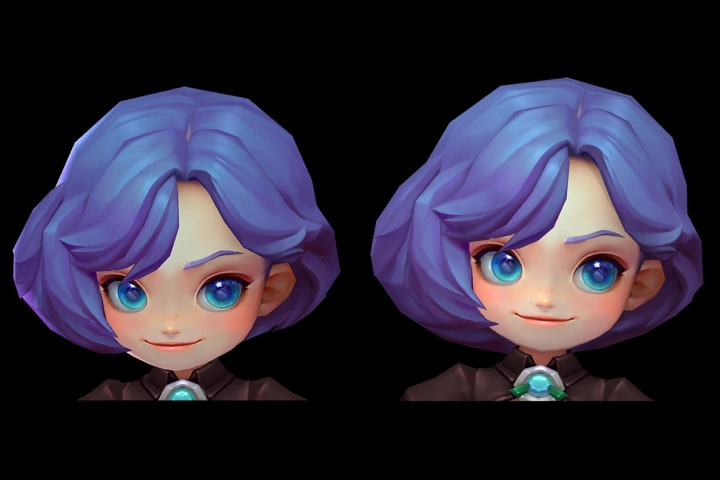 You’ve meticulously sculpted every detail, followed the topology guides, and rendered the final passes, yet the character still feels a bit… flat. It’s a common hurdle when moving from realistic to stylized forms; achieving that specific, captivating appeal requires a different mindset. The key isn’t just replicating shapes, but understanding how exaggerated forms and subtle details communicate personality and emotion effectively.
💡 Three Pillars of Expressive Stylized Character Creation
1. Embrace Proportional Exaggeration for Personality
It’s not just about learning the technique—it’s about shifting how you think about silhouette and form language. In stylized modeling, particularly for SD and bishoujo characters, proportions are your primary tool for conveying personality. Instead of strictly adhering to real-world anatomy, focus on how exaggerating certain features, like a larger head for an SD character or a more slender, elongated frame for a bishoujo, instantly communicates their intended vibe. Think about the core essence of your character and amplify it through deliberate scale and shape choices.
2. Master the Art of Silhouette and Shape Language
3D Character Artist Mina Kim emphasizes that a strong silhouette is fundamental. Before diving into intricate details, spend significant time blocking out the primary shapes and ensuring the character’s outline is distinct and readable. This involves understanding how to use exaggerated forms, like the flow of hair or the draping of clothing, to create compelling negative space and visual interest. This one tweak can seriously level up your output quality, making characters recognizable even at a distance.
3. Refine Facial Structure for Emotional Resonance
Capturing emotion in stylized faces goes beyond just placing eyes and a mouth. It’s about understanding how subtle shifts in the brow, cheekbones, and jawline create nuanced expressions. Mina Kim’s approach highlights sculpting techniques that define facial structure to enhance visual appeal, bringing out the unique charm of bishoujo characters. This often involves playing with asymmetry and deliberately softening or sharpening key planes to guide the viewer’s eye and convey emotion effectively.
🛠️ Key Skills & Details That Define Professional Quality
Professional stylized character modeling, especially for game industry pipelines, demands more than just proficiency in software. It’s about integrating artistic sensibility with efficient workflows.
- High-Sensitivity Sculpting: This isn’t just about using the correct brushes in ZBrush. It’s about developing an intuitive feel for the clay, understanding how subtle pressure variations and strokes can create organic, believable stylized forms. For instance, when sculpting stylized hair, focus on defining the primary masses and flow first, then adding secondary details that suggest individual strands without creating an overly busy look.
- Dimensional Clothing Design: Creating stylized outfits requires thinking in terms of volume and form, not just flat textures. Use 3ds Max or ZBrush to block out clothing with dimensional forms, paying attention to how fabric would naturally fold and drape on an exaggerated body shape. This approach ensures clothing feels integrated with the character, rather than simply layered on top.
- Toon-Like Rendering Techniques: Achieving a polished, illustrated look often involves specific rendering setups. Mastering BPR (Best Preview Render) in ZBrush or leveraging specific MatCap materials and lighting environments in 3ds Max can help achieve a toon-like, illustrated style. The goal is to combine 3D depth with the charm of 2D visuals, making the final output pop with clarity and appeal.
💬 Frequently Asked Questions
Q. As a beginner 3D modeler, what is the most crucial element to focus on when starting stylized character creation?
A. 3D Character Artist Mina Kim stresses that understanding silhouette and shape language is paramount for beginners. Before worrying about intricate details, focus on establishing a strong, readable outline and defining the character’s core form through exaggerated proportions.
Q. How can I make my stylized character models more emotionally expressive?
A. 3D Character Artist Mina Kim suggests focusing on facial structure refinement. Small adjustments to the brow, cheekbones, and jawline can significantly impact emotional conveyance. Practice sculpting various expressions and analyze how subtle changes in planes affect the overall mood.
Q. What are the essential tools for creating stylized female characters in a game development context?
A. 3D Character Artist Mina Kim’s approach emphasizes the industry-standard tools: ZBrush for high-sensitivity sculpting and 3ds Max for foundational modeling and scene setup. Proficiency in both is key to a robust workflow for stylized character creation.
👉 Want to Go Deeper?
Ready to transform your character modeling skills? Explore the comprehensive curriculum designed by a seasoned industry professional.