Mastering Stylized Character Sculpting in Blender: Minjeong Shin’s Essential Workflow
🧐 Ever Hit a Wall with Character Sculpting?
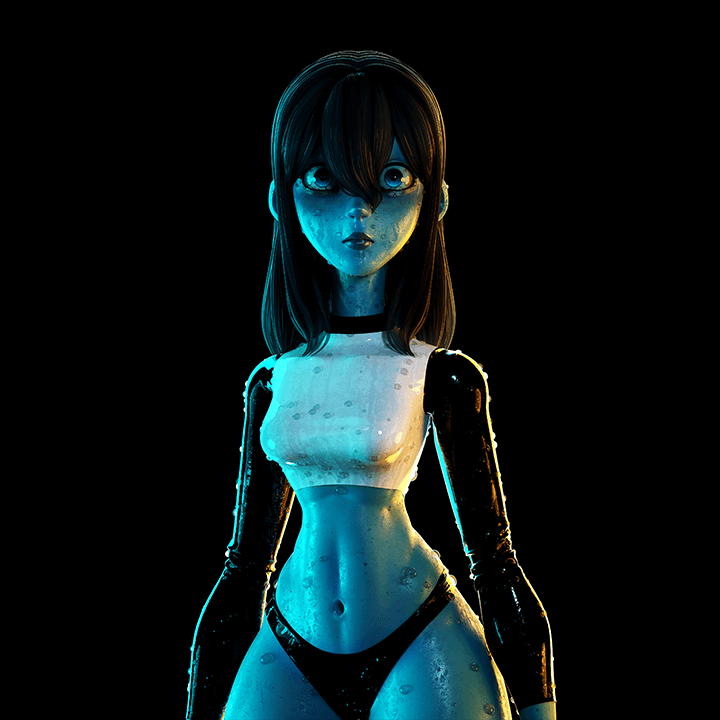 You’ve followed the tutorials, meticulously adjusted every vertex, yet that signature stylized character you envision still feels just out of reach. The problem often isn’t a lack of effort, but a missing piece in the workflow—that specific detail that separates a decent sculpt from a truly captivating one. It’s about understanding the core principles that guide the hands of seasoned professionals like 3D Character Artist Minjeong Shin.
💡 Minjeong Shin’s Core Workflow Secrets for Stylized Characters
1. The Art of Intentional Form: Beyond Basic Sculpting
The foundation of a strong stylized character lies in deliberate shaping. Minjeong Shin emphasizes building the overall form with a clear vision, rather than just reacting to the mesh. This involves using the Elastic Deform Brush early and often to establish the primary silhouette and key anatomical landmarks that define the character’s style—think of it as setting the stage before adding the fine details. It’s not just about learning the technique; it’s about shifting your mindset to think sculpturally from the initial sphere.
2. Iterative Refinement: The Power of Strategic Remeshing and Smoothing
Achieving clean topology and smooth surfaces is crucial, especially when working with stylized forms. Minjeong Shin’s approach involves strategic remeshing to manage polygon density during intensive sculpting phases. When smoothing, it’s vital to understand when to use the Smooth brush for broad adjustments and when a tool like Shift+C (often mapped to a specific brush for highlighting) can refine key areas without losing definition. This iterative process of sculpting, remeshing, and smoothing ensures a polished result without compromising the character’s unique appeal.
3. The Subtle Narrative: Sculpting Expressive Features with Precision
Capturing emotion and personality is key, and Minjeong Shin’s method focuses on sculpting facial features with an understanding of how they contribute to the overall character. For instance, the subtle lift at the corners of the mouth created with careful brushwork can transform a neutral expression into a gentle smile. Precision in defining the space between the nose and lips, or the precise curve of an eyelid, adds a layer of storytelling that elevates the character beyond a mere 3D model. These small but deliberate adjustments are where professional quality truly shines.
🛠️ Key Skills & Details That Define Professional Quality
The journey from a basic sphere to a character that breathes life involves a series of deliberate technical decisions. For 3D Character Artist Minjeong Shin, this translates into a workflow that prioritizes both efficiency and aesthetic impact.
- Form Foundation: Instead of diving straight into detail, Minjeong Shin stresses establishing the core silhouette and primary forms using brushes like Elastic Deform. This ensures the character’s unique style is baked in from the start, making subsequent detailing more intuitive.
- Topology Management: During complex sculpting phases, strategic Remeshing is employed to maintain manageable polygon counts. This isn’t just about performance; it allows for cleaner detail work and smoother transitions between different areas of the sculpt.
- Expressive Detail Work: Crafting features like eyes and mouths involves a deep understanding of subtle form changes. For example, the precise angle of an eyelid or the slight upward curve of the lip corners significantly impacts the character’s perceived emotion. This is achieved through careful brush control, often using the SculptDraw Brush and refining with Smooth or Shift+C shortcuts.
- Connecting Elements: The flow between features is critical. Minjeong Shin demonstrates how to naturally connect the nose to the lips, or sculpt the brow bone to seamlessly integrate with the forehead, creating a cohesive and believable character form. This attention to anatomical flow is a hallmark of professional work.
- Strategic Detailing: Highlighting specific areas, like the tip of the nostrils or the curve of the chin, is often done with focused brushwork combined with the Draw Sharp Brush and subsequent smoothing. This process carves out definition without making the forms appear harsh or unnatural.
💬 Frequently Asked Questions
Q. As a 3D Character Artist, how can I ensure my stylized characters don’t look too cartoonish if I aim for a more subtle charm?
A. The key is in the controlled exaggeration of form. Instead of pushing every feature to its extreme, focus on defining the most characteristic elements that express the desired charm. Minjeong Shin’s approach often involves using brushes like Elastic Deform to subtly alter primary shapes and employing SculptDraw Brush for precise adjustments on features like the chin or cheekbones, ensuring the stylized elements enhance, rather than overwhelm, the character’s personality.
Q. As a 3D Character Artist, what’s the most efficient way to achieve clean surfaces and smooth transitions during intensive sculpting in Blender?
A. Regularly utilizing Blender’s Remesh feature is crucial. Minjeong Shin recommends remeshing at strategic points to maintain an optimal polygon count. Following this with careful application of the Smooth brush or specific highlighting tools (like Shift+C) helps refine the surface and ensure smooth transitions between sculpted forms, preventing blockiness and achieving a polished look.
Q. As a 3D Character Artist, how can I make my character’s eyes convey a specific emotion, like a gentle smile, effectively?
A. For a smiling expression, focus on the subtle upward lift of the outer corners of the lower eyelid and a slight softening of the upper lid. Minjeong Shin’s technique involves carefully shaping the eye socket and then using brushes like SculptDraw Brush to build up the form of the eyelids, followed by Elastic Deform to refine the overall eye shape and the transition towards the nose and cheek. This nuanced sculpting is what brings the character’s emotion to life.