🛠️ Key Skills & Details That Define Professional Quality
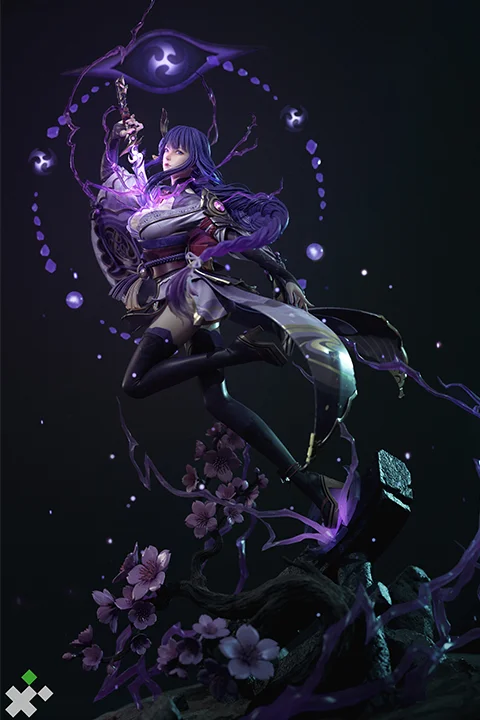
Translating the principles above into actual work requires a deep understanding of ZBrush’s capabilities. This isn’t just about knowing which brush to use; it’s about how and when to use them to achieve specific results that mimic real-world physics and artistic intent.
- Anime Anatomy Refinement: Professionals dissect the nuances of anime proportions, focusing on exaggerated yet cohesive forms. This means understanding the skeletal structure and musculature that underpins even the most stylized characters, ensuring they feel grounded and believable within their aesthetic. Techniques like Polygrouping for specific anatomical areas become crucial for managing complex forms and applying targeted adjustments.
- Mastering Elemental FX Sculpting: Creating convincing effects requires a blend of artistic intuition and technical execution. This involves sculpting abstract shapes that suggest motion and energy, then refining them with techniques that mimic translucency, glow, or chaotic movement. Think of sculpting the essence of fire rather than just a flame shape.
- Texture and Material Application: Beyond sculpting the base form, professionals consider how textures will enhance the final look. This includes creating tile-able textures for clothing or surfaces and understanding how material properties affect light interaction. The course delves into applying materials that enhance realism, optimize rendering, and present the final collectible in a professional manner. This also extends to preparing models for 3D printing, including necessary model cuts.
💬 Frequently Asked Questions
Q. As a 3D Character Artist, how can I accurately sculpt proportions for anime characters from a single front view illustration?
A. A 3D Character Artist needs to actively reconstruct the missing views by understanding typical anime anatomy and proportions. Break down the character into basic shapes, then progressively refine the form by considering how it would naturally extend in three dimensions. This process involves informed deduction based on visual cues and common anatomical structures within the anime style, rather than pure guesswork.
Q. What are some practical tips for a 3D Character Artist to incorporate dynamic effects like fire or water into their sculptures?
A. A 3D Character Artist can achieve this by treating effects as physical entities. Sculpt abstract shapes that convey the energy and movement of the element, then refine them to suggest properties like translucency, glow, or chaotic flow. Understanding how these elements interact with light and form is key to making them look convincing and integrated with the character.
Q. How can a 3D Character Artist ensure their sculpted collectible figurine is optimized for both rendering and potential 3D printing?
A. A 3D Character Artist should focus on clean topology and efficient mesh density. For rendering, understanding material application and surface detail is crucial. For 3D printing, this involves preparing the model with appropriate wall thickness, avoiding non-manifold geometry, and potentially planning for model cuts to ensure successful printing and assembly. The course demonstrates how to achieve both.