🛠️ Key Skills & Details That Define Professional Quality
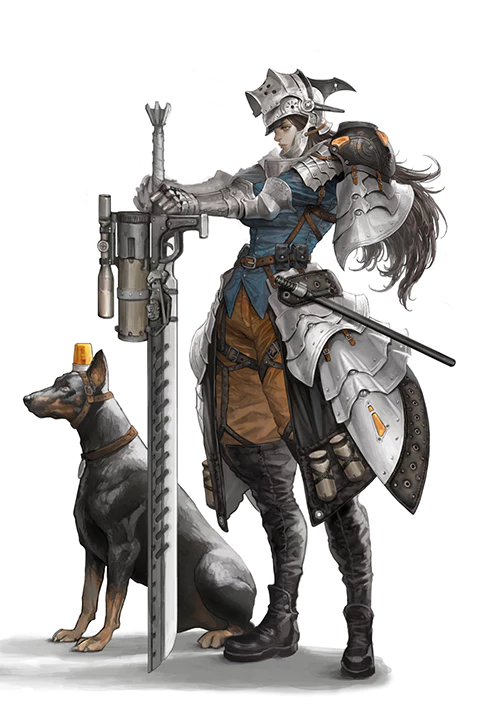
Tahra’s process emphasizes practical, hands-on techniques over theoretical jargon.
- Understanding Overlap and Silhouette: Tahra constantly references side views to ensure elements don’t create awkward or impossible overlaps. This means considering how armor plates, belts, and even capes interact in 3D space, refining the primary silhouette.
- Material Harmony: Notice how Tahra blends materials like metal, leather, and fabric. He achieves this by using consistent color palettes for similar materials initially, then refining them. For instance, applying a Burn and Dodge technique on metal parts is a crucial finishing step to add depth and realism.
- Layer Management for Experimentation: Tahra frequently creates new layers for specific elements like horns or weapons. This allows for experimental additions without disrupting the primary structure, making it easy to integrate or discard ideas later. He also uses Overlay layers for overall color and tone adjustments, a common pro technique for unifying a piece.
- Shape Language Consistency: Even within a mercenary theme, Tahra ensures distinct styles. He notes that mixing overly complex curves with rigid linear shapes can clash. By consistently applying a chosen shape language or subtly blending styles (like medieval fantasy with zippers), a character feels more cohesive.
💬 Frequently Asked Questions
Q. What is the purpose or key takeaway of Tahra’s character design class?
Tahra’s character design class aims to provide a coherent understanding of design principles through practical examples and exercises. The core takeaway is learning to apply expertise and analyze both successful and unsuccessful design cases to create logically structured and visually appealing characters.
Q. What distinguishes Tahra’s character design class from others?
This class distinguishes itself by focusing on practical, hands-on techniques and real-world application, rather than solely theoretical concepts. It emphasizes actionable tips and detailed examples for game development character design, making the learning process more effective for aspiring artists.
Q. What is the most important step in Tahra’s character design workflow for improving quality?
Tahra identifies the “first draft variation” as the most crucial step for improving overall quality. This iterative process, involving fleshing out thumbnail sketches and creating multiple design options, is key to discovering unique elements and establishing a strong foundation for the final character.