💡 Three Expert-Level Shifts for Richer 2.5D Animation
1. The “Moving Illustration” Mindset: Composition is Key
The core principle here is viewing animation not just as movement, but as a living illustration. This means prioritizing composition and storytelling from the outset, just as you would with a static piece. Think about how elements interact and guide the viewer’s eye. This approach ensures your 2.5D scenes have inherent artistic merit before a single frame is animated.
2. Hybrid Workflow: Seamlessly Merging Worlds
Mastering the blend of traditional painting and 3D tools is crucial. Start by embracing scanned traditional art as your foundation. Then, leverage 3D software like Blender to create depth by treating these illustrations as image planes. This isn’t just about compositing; it’s about strategically using 3D to enhance the atmosphere and dimensionality of your hand-crafted backgrounds.
3. The Art of Texture Integration: Beyond Simple Overlays
The final polish comes from effectively integrating textures. This involves more than just applying a texture map. It’s about understanding how to use scanned textures from your traditional work – watercolor washes, graphite strokes – to add a unique, handmade quality to your 3D elements and final renders. This detail work is what truly bridges the gap between digital and traditional, giving your animation an authentic feel.
🛠️ Key Skills & Details That Define Professional Quality
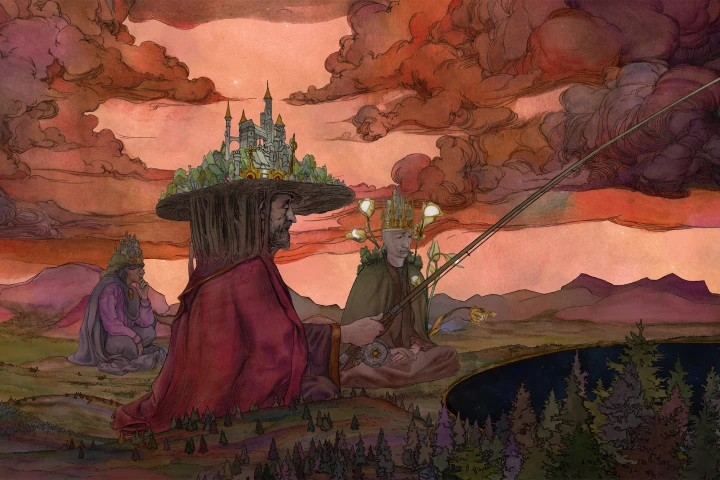
When creating atmospheric 2.5D animation, the devil is in the details that blend artistry with technical execution.
- For Traditional Artwork: Focus on capturing the nuances of your medium. Practice controlling watercolor edge variations and graphite textures. Digitally process scanned illustrations to maintain that organic feel, rather than letting it get lost in translation.
- For 3D Environment Building: Begin by plotting basic forms in perspective, then use techniques like gesture drawing to imbue your 2.5D backgrounds with life, even before character animation begins. When setting up your scene in Blender, manipulate traditional backgrounds as image planes to maintain artistic integrity.
- For Character Animation: Develop a robust animation pipeline. Start with rough animation to nail the core performance, then move to tie-downs and clean-ups to refine the motion. Ensure your character animation harmonizes with the depth and feel of your 2.5D environments.
- For Final Compositing: Implement camera movements that complement the scene’s atmosphere. Pay close attention to color grading and overpainting in software like After Effects to unify all elements. The final export and color correction in tools like DaVinci Resolve are critical for achieving a polished, professional output.
💬 Frequently Asked Questions
Q. How does Animation Director Oliver Mottram ensure traditional artwork maintains its feel in a 3D environment?
Animation Director Oliver Mottram emphasizes treating traditional artwork as the primary foundation. This involves high-quality scanning and then strategically using 3D software to enhance depth and atmosphere without overpowering the original artistic texture. The goal is a symbiotic relationship where 3D supports, rather than replaces, the hand-crafted aesthetic.
Q. What is the most efficient way to integrate 2D character animation with 3D backgrounds for 2.5D animation, according to Animation Director Oliver Mottram?
Animation Director Oliver Mottram advocates for a clear workflow: first, establish your 2.5D environment in 3D, defining camera movement and lighting. Then, animate your 2D characters against this established depth, ensuring their movement and lighting interactions are considered from the start. This prevents disjointed results and ensures a cohesive final scene.
Q. What specific techniques does Animation Director Oliver Mottram use to add atmosphere and depth to 2.5D scenes?
Animation Director Oliver Mottram focuses on a combination of techniques. This includes using hand-painted watercolor backgrounds, manipulating them as image planes in Blender for parallax effects, and carefully considering lighting and color grading in post-production. Overlaying textures derived from traditional media also plays a key role in creating a rich, atmospheric quality.