💡 Three Core Principles for Dynamic 2D Animation
Drawing from 40 comprehensive video lessons, here are the actionable insights from 2D Animators Jongha Yoon and Jonghyun JUNG-BOIX that can immediately elevate your work.
1. Deconstructing Natural Motion Through Body Structure
Understanding how elements like the pelvis, feet, and hands articulate during an action, such as walking, is fundamental. It’s not just about making the character move; it’s about understanding the interconnectedness of human body mechanics. This deep dive into principles allows for more believable and grounded character performances. It’s about shifting your thinking from drawing poses to understanding the physics behind movement.
2. Leveraging Physics for Impactful Animation
To create animation with a vivid impact, you must grasp and strategically exaggerate the laws of physics. Concepts like ‘spacing’ and ‘speed’ are critical. By understanding how these principles affect visual perception, you can produce animations that feel dynamic and engaging, rather than flat or predictable. This involves a keen observational skill and the courage to push boundaries within those natural laws.
3. The Art of “Timing” and “Spacing” for Expressive Poses
Mastering ‘spacing’ and ‘timing’ is non-negotiable for fluid character animation. This involves carefully controlling the distance between frames and the duration of each pose. Understanding the nuances, like the difference in timing between hands in various actions, allows for expressive subtlety. This one tweak can seriously level up your output by giving your characters personality and weight.
👉 Explore Jongha Yoon & Jonghyun JUNG-BOIX’s Approach
🛠️ Key Skills & Details That Define Professional Quality
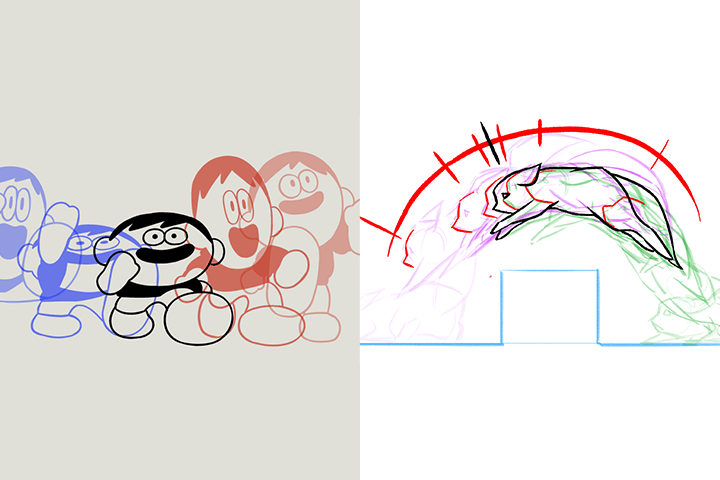
Professional-level 2D animation isn’t just about the software; it’s about a refined workflow and an intuitive understanding of form and motion. This masterclass delves into practical tool usage, starting with the basics of software like Photoshop and Wacom, including brush control and pressure sensitivity. Beyond the tools, it focuses on structural drawing, understanding perspective, and the application of color and light theory to create more vivid background concept art. You’ll learn how to construct natural motions by dissecting the human body’s movement principles, and then apply this knowledge to character animation. This practical, hands-on approach, guided by industry veterans, ensures you’re building skills that translate directly to industry-ready animation.
💬 Frequently Asked Questions
Q. As a 2D Animator new to character motion, where should I begin to ensure my animations don’t look stiff?
A. Start by focusing on understanding the fundamental principles of natural motion. Study how human body parts articulate during actions like walking. This foundational knowledge, emphasized in the masterclass, will allow you to build believable movement from the ground up, rather than just drawing poses.
Q. How can a 2D Animator effectively use the concepts of ‘spacing’ and ‘timing’ to improve their animation’s impact?
A. Mastering ‘spacing’ and ‘timing’ involves meticulously controlling the distance between your animation frames and the duration of each pose. Experiment with varying these elements to convey speed, weight, and emotion. The masterclass provides practical exercises to help you develop this critical skill for more dynamic and impactful character performances.
Q. What practical advice does a 2D Animator receive regarding the use of visual effects to enhance animation quality?
A. Once your character’s motion is solid, the next step is arranging the overall scene with appropriate effects. Understanding how and where to place elements like smoke, wind, or camera shake can significantly maximize the final animation’s quality. The masterclass guides you on using these effects strategically to complement the scene and story.