Anatomy-Powered Storytelling: Mastering Dynamic Multi-Character Scenes
🧐 Frustrated with Static Character Interactions?
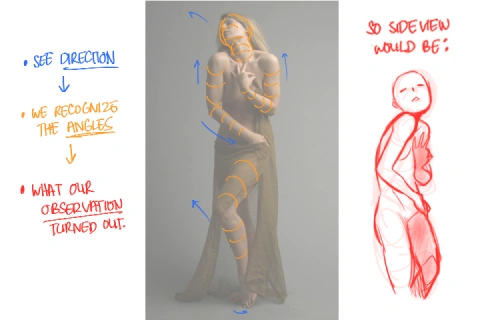 You meticulously draw each character, but when they’re together, the scene feels lifeless. Poses clash, interactions look forced, and the overall narrative falls flat. This isn’t about drawing characters; it’s about drawing relationships and moments. The key often lies not in complex rendering, but in a deeper understanding of how anatomy fuels dynamic storytelling.
💡 Three Pillars of Captivating Multi-Character Art
1. Anatomy as Your Storytelling Engine
The human form isn’t just about proportions; it’s a language of action and emotion. Understanding skeletal structure and muscle flow allows you to push poses beyond the basic stance. Think about how a subtle shift in weight, a tilted head, or the tension in a shoulder can convey a character’s intent or reaction. This isn’t just about looking at references; it’s about interpreting their underlying structure to inform your own character’s pose, creating a chain reaction of believable gestures.
2. Reference, Don’t Replicate: The Art of Observation
Directly copying references is a crutch that limits your artistic voice. Instead, train yourself to observe the purpose and structure within a reference. What is the body doing? Why is it positioned that way? Break down complex poses into simple shapes and lines. This method builds your visual library and allows you to confidently combine elements from multiple sources, creating unique and dynamic character interactions that feel authentic, not copied.
3. The Power of Implied Connection
When multiple characters share a scene, their interaction becomes the focal point. This involves more than just placing them next to each other. Consider their line of sight, the negative space between them, and how their gestures complement or contrast each other. Even a shared glance or a subtle leaning motion can create a powerful sense of connection or tension, driving the visual narrative forward without a single word being spoken.
🛠️ Key Skills & Details That Define Professional Quality
Beyond mastering individual poses, the true magic of multi-character illustration lies in how you integrate them into a cohesive narrative. This involves:
- Understanding Form and Volume: Think of your characters as 3D objects inhabiting space. This perspective is crucial for correctly applying light and shadow, ensuring they feel grounded and believable within the scene. Practicing value studies based on anatomical form will dramatically improve how your characters interact with light.
- Dynamic Line Weight: Your line art is the backbone of your illustration. Varying line weight can emphasize form, direct the viewer’s eye, and enhance the sense of movement. Thicker lines can suggest shadow or weight, while thinner lines can define edges or convey delicacy. This subtle control elevates simple sketches into polished illustrations.
- Color Theory for Mood and Focus: Color is a powerful tool for storytelling. Learn how different color palettes can influence the mood of your scene and how to use color to guide the viewer’s attention to key interactions or characters. Understanding complementary and analogous colors, as well as the impact of warm and cool tones, will add significant depth and professionalism to your work.
💬 Frequently Asked Questions
Q. How can CharacterIllustrator CJ Joaquin help me improve my multi-character scenes?
CharacterIllustrator CJ Joaquin’s course focuses on building a strong foundation in anatomy, which is crucial for creating dynamic and believable character interactions. They emphasize learning to observe and interpret references effectively, rather than just copying, and teach techniques for creating a sense of connection and narrative flow between multiple characters.
Q. What are the most important anatomy principles for drawing character interactions?
The most vital anatomy principles for character interactions revolve around understanding weight distribution, joint articulation, and the flow of the body’s lines of action. Learning how a character’s stance communicates their intent and how their posture influences their interaction with others is key. This includes understanding how to create believable tension or relaxation through subtle muscle and bone positioning.
Q. How does CharacterIllustrator CJ Joaquin teach effective reference usage for dynamic poses?
CharacterIllustrator CJ Joaquin advocates for a deep, analytical approach to references. Instead of tracing or directly copying, the method involves deconstructing poses to understand the underlying skeletal and muscular structure. This allows artists to then apply those learned principles to their own original characters, leading to more authentic and dynamic poses that serve the narrative.