💡 Kaisar’s 3 Essential Circle Design Principles
Concept Artist Kaisar breaks down the process into actionable steps. Here are the core takeaways to elevate your circle-based design workflow:
1. Strategic Circle Placement for Structure
- The Principle: Circles aren’t just decorative; they’re structural building blocks. By strategically placing and overlapping circles, you establish a foundational rhythm and hierarchy within your design. This “stabilization work,” as Kaisar calls it, guides the viewer’s eye and dictates the flow of your artwork.
- The Method: Start with larger circles to define primary forms and then use smaller, strategically placed circles to reinforce them. Think of it as creating a scaffolding. Kaisar emphasizes that while four circles can be effective, the key is the arrangement and interaction between them, not just the quantity. This ensures a balanced and visually stable base.
2. Embracing Asymmetry for Dynamic Forms
- The Insight: While symmetry can be stable, asymmetry is where dynamic designs truly shine. Kaisar demonstrates how deviating slightly from perfect balance—by making one side larger or extending a form with a specific flow—can inject energy and visual interest. This asymmetry guides the viewer’s eye through the piece, creating a sense of movement and narrative.
- The Workflow: Don’t be afraid to experiment. Kaisar suggests trying bolder, asymmetrical compositions and consciously choosing areas of emphasis. This might involve drawing a form that twists or is intentionally rolled up, creating unique visual elements that break from the predictable.
3. The Power of ‘Blur and Refine’ for Emphasis
- The Signature Touch: To truly make a design pop, Kaisar recommends a subtle yet powerful technique: blurring specific areas to control focus. By slightly blurring elements that aren’t the primary focus, you naturally draw attention to the sharp, detailed areas. This isn’t about hiding flaws, but about directing the viewer’s gaze and enhancing the overall impact of your emphasized elements.
- Why It Works: This technique creates a depth of field and highlights the intentional design choices. It’s about guiding the viewer’s perception, making the most important parts of your design stand out while keeping the overall image clean and readable.
🛠️ Key Skills & Details That Define Professional Quality
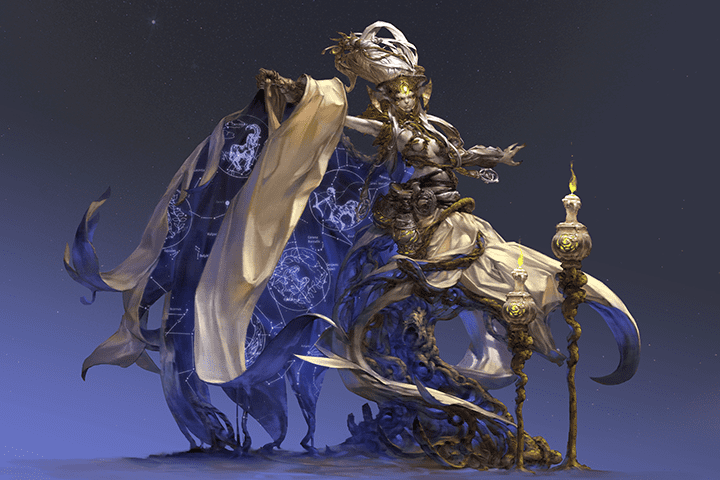
Professional concept art isn’t just about cool ideas; it’s about execution. Kaisar’s approach emphasizes practical techniques that translate theoretical knowledge into tangible results:
- Structural Understanding: Mastering the ‘six keys’—light, shading, three-dimensionality, human figure, movement, and design—is crucial. Kaisar’s curriculum provides practical exercises to reinforce these fundamentals, showing how to apply them to specific objects like helmets, armor, and even character faces.
- Shape Language & Modifiers: Learning to use basic shapes, especially circles, as structural modifiers is key. This allows for systematic design development and effective variations. Kaisar’s method highlights how to manipulate these shapes to create visually appealing and unique forms, whether it’s for a weapon or an entire character.
- Intentional Emphasis: Professional artists know where to place emphasis. Whether it’s a specific part of a design for silhouette clarity or an internal detail for visual interest, understanding how to guide the viewer’s eye is paramount. Kaisar’s techniques demonstrate how to achieve this through composition, line weight, and strategic detailing.
- Iterative Refinement: Don’t be afraid to experiment and ‘fail forward.’ Kaisar stresses that mistakes are learning opportunities. Analyzing what went wrong and adjusting your approach is vital for growth. This iterative process, combined with a solid understanding of form and structure, leads to robust and compelling character designs.
💬 Frequently Asked Questions
Q. How does Concept Artist Kaisar suggest organizing a drawing process for consistency?
Concept Artist Kaisar suggests systematizing your drawing process by understanding fundamental concepts and identifying personal weaknesses. They emphasize that a well-organized routine and workflow, with clear, necessary steps, leads to more consistent artistic output.
Q. What is the most important design principle Concept Artist Kaisar teaches for creating unique character forms?
Concept Artist Kaisar highlights the strategic use of circles and asymmetry as key principles for creating unique character forms. By thoughtfully placing and varying circle-based structures, and embracing asymmetrical compositions, artists can inject dynamism and distinctiveness into their designs.
Q. Can beginners benefit from Concept Artist Kaisar’s design techniques, or is it geared towards experienced artists?
Concept Artist Kaisar suggests that while the class covers fundamental theoretical approaches, it is most beneficial for artists who already have some drawing experience but feel stuck or are looking to refine their workflow. Beginners might find the structural focus challenging initially, but the underlying principles are valuable for long-term skill development.