🛠️ Key Skills & Details That Define Professional Quality
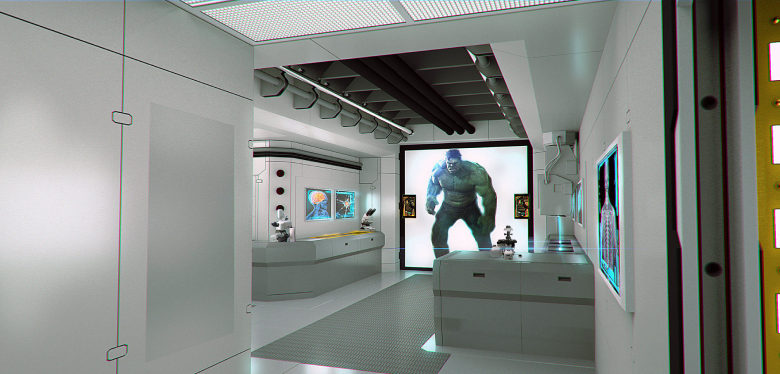
Elevating your concept art from good to industry-standard requires a deep dive into practical techniques. Concept Artist Kelton Cram’s approach focuses on tangible skills that translate directly into production-ready assets.
Mastering Materiality: Understanding how to sculpt and render complex materials is paramount. This involves not just the technical application of tools but also a keen observation of how light interacts with different surfaces in various environments. For example, learning to depict the subtle sheen of worn leather versus the hard glint of polished metal in ZBrush and Keyshot will significantly enhance realism.
Planned Sketching & Composition: The success of an iconic image often hinges on meticulous planning. This means dedicating time to planned sketches that explore character poses, costume designs, and overall composition before committing to final renders. Concept Artist Kelton Cram stresses that a well-thought-out plan is the foundation for a stronger, more impactful final piece.
The 3D-to-2D Pipeline: Effectively integrating 3D renders into a 2D workflow is a core competency. This involves knowing when and how to push the 3D model, using photo texturing judiciously, and applying composition principles to ensure the final 2D image tells its story powerfully. It’s about using 3D as a sophisticated foundation, not a crutch.
💬 Frequently Asked Questions
Q. As a Concept Artist, what’s the most crucial step in character design before jumping into 3D?
Concept Artist Kelton Cram emphasizes that the most crucial step is the planned sketch that defines the character’s story and visual elements. This includes anatomy, costuming, and posing, ensuring that the silhouette and overall design communicate the character’s narrative effectively before 3D modeling begins.
Q. How can a Concept Artist effectively use 3D software to enhance 2D illustrations?
A Concept Artist can effectively use 3D software by employing it for rapid ideation, establishing realistic forms, and setting up complex lighting and camera angles. This allows for faster iteration and more accurate foundational elements, which are then enhanced with 2D painting and texturing techniques in software like Photoshop to achieve a polished, production-ready look.
Q. What is Concept Artist Kelton Cram’s advice on rendering diverse materials in different environments?
Concept Artist Kelton Cram’s advice focuses on understanding material properties and how they react to light and environmental conditions. This involves detailed observation, employing appropriate shaders and textures in 3D software, and fine-tuning renders to accurately represent materials like metal, fabric, or organic surfaces within their intended settings.