💡 Kenn Yap’s Framework for Purposeful Mech Design
These insights from Concept Artist Kenn Yap can transform your workflow, ensuring every mech you design is not only visually striking but also tells a compelling story.
1. Purposeful Thumbnailing: Beyond Just Cool Shapes
It’s not just about drawing random, cool-looking shapes. The key is purposeful thumbnailing. Before committing to a final piece, generate dozens of small, quick sketches. Your reference board and design brief should be your constant guides. For instance, if your brief is for a garbage-collecting robot, your thumbnails should reflect that function and theme, drawing inspiration from sources like submarines for their robust, functional shapes, rather than just generic spiky robot forms. This approach ensures your design decisions align with the project’s core needs.
2. Building a Unified Design Language
Don’t let your mech look like a collection of unrelated parts. Develop a consistent design language. This involves understanding the mechanical equivalent of human anatomy and how to deform and adapt forms for a mechanical context. Kenn Yap emphasizes taking inspiration from real-world objects, like submarines for a garbage collector mech, to create a cohesive silhouette and form language. Instead of just adding random details, ensure each element contributes to the overall narrative and function, such as incorporating a fish-like head or submarine-inspired fins. This makes the design believable and cohesive.
3. Strategic Silhouette Evolution
The silhouette is the first impression. Kenn Yap advocates for an iterative process of silhouette evolution, where you don’t just create vastly different options, but also variations on a promising theme (A, A1, A2). Testing silhouettes from different angles (front, side) is crucial because a shape that looks great from one view might be awkward from another. For example, a design with a short torso and long legs might work well from the side but need adjustments for a front view to maintain its impact. This detailed exploration ensures the final silhouette is both unique and visually balanced.
🛠️ Key Skills & Details That Define Professional Quality
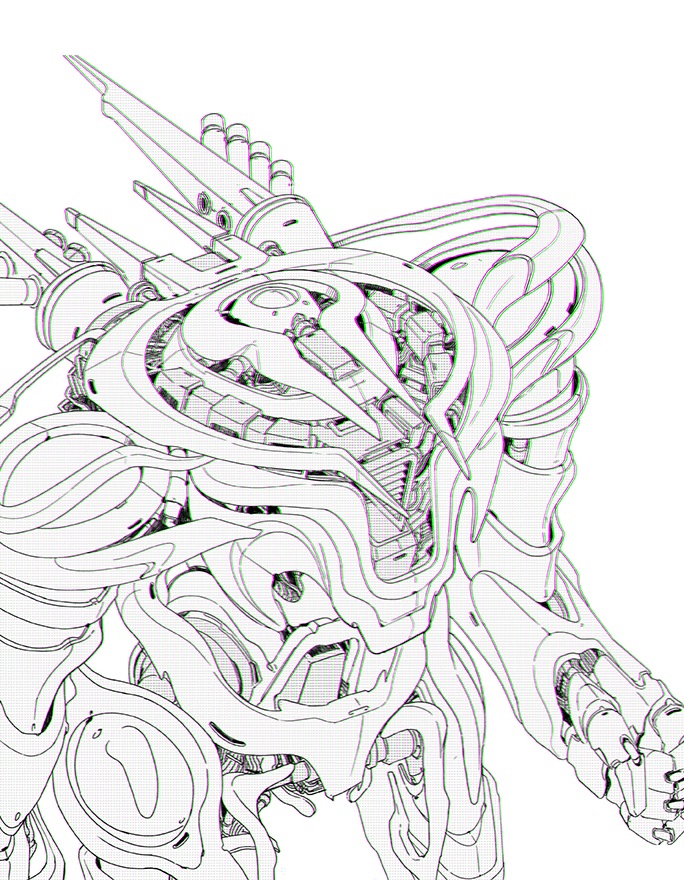
Moving beyond the foundational silhouette, the magic truly happens in refining the design with purposeful details and a strong understanding of form. Concept Artist Kenn Yap highlights that professional-quality mechs aren’t just about complex shapes; they are about believable functionality and narrative integration.
- Form and Silhouette Harmony: When iterating on thumbnails, focus on how basic shapes (spheres, cylinders, capsules) combine to create an interesting and unique silhouette. It’s less about drawing perfect 3D forms at this stage and more about capturing a compelling 2D outline that implies volume and presence. For instance, consciously choosing a stumpy torso with long, capsule-like legs can dramatically alter the mech’s perceived character and function.
- Meaningful Details: Details should serve a purpose. Instead of adding random greebles, consider how elements like multi-jointed arms or integrated storage bins enhance the mech’s narrative. Kenn Yap’s approach of placing a garbage collection bin on the mech’s “belly” or giving it specialized arms for different-sized debris demonstrates how details can reinforce the core concept and storytelling.
- Line Weight and Storytelling: Even in rough sketches, the intentional use of line weight can convey form, weight, and direction. A thicker line might indicate a heavier, more substantial part, while thinner lines can suggest finer details or lighter elements. This understanding of line work, even at the thumbnail stage, helps build a more compelling visual story that the viewer can instinctively understand.
💬 Frequently Asked Questions
Q. As a beginner Concept Artist, how can I avoid creating mechs that look too similar to existing popular designs?
Concept Artist Kenn Yap emphasizes developing a unique design language by starting with a strong, purpose-driven brief. Instead of just drawing “cool robots,” define the mech’s function, environment, and narrative. Draw inspiration from less obvious sources – like submarines for a garbage collector, or industrial equipment for a construction bot. Focus on transforming these inspirations through silhouette, shape, and storytelling details to create something truly distinct.
Q. When is it best to use solid silhouette thumbnails versus line-art thumbnails in my mech design process?
Concept Artist Kenn Yap suggests that both methods are valid and serve different purposes. Solid silhouette thumbnails are excellent for quickly evaluating the overall shape, mass, and impact of a design without getting bogged down in detail. Line-art thumbnails, while still rough, can offer a clearer sense of form and potential articulation, helping you understand how different parts might connect and interact. Many artists, including Kenn Yap, might start with solid silhouettes for broad exploration and then transition to line art for more refined concept development.
Q. How can I make my mech designs feel more believable and less like pure fantasy, even in a sci-fi context?
Concept Artist Kenn Yap stresses the importance of observing reality. Even for fantastical mechs, grounding them in plausible mechanics and anatomy makes them more convincing. This means understanding basic human anatomy as a reference point for proportion and movement, then strategically adapting those principles for mechanical components. Study real-world engineering, industrial design, and even biology for inspiration on how forms interact, how parts move, and how structures support weight. This research helps in creating designs that feel functional and “built” rather than arbitrarily imagined.