💡 3 Pro-Level Secrets for Killer Level Design Portfolios
Here are three core principles Leveldesigner Bisk emphasizes to elevate your work from ordinary to outstanding:
1. Master the Art of Meaningful Choice Through Map Design
Level design isn’t just about placing assets; it’s about crafting player experience. Bisk highlights how presenting players with distinct paths – like a safe, low-reward route versus a challenging, high-reward one – creates engaging gameplay. This isn’t just about aesthetics; it’s about strategic design that forces players to think and makes the world feel dynamic. The key is understanding that every corner and every corridor should serve a purpose in guiding the player’s journey and decision-making.
2. Streamline Your Workflow with Strategic Prototyping
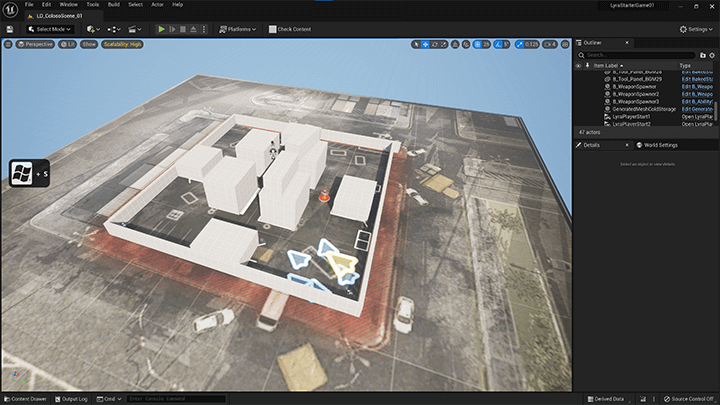
Instead of diving straight into detailed art, Bisk advocates for creating “dummy maps” early on. These are playable, low-fidelity prototypes that allow for rapid playtesting. This approach helps validate the core gameplay mechanics and flow before investing significant time in visual polish. By focusing on functionality first, you can identify and fix issues with player movement, pacing, and overall fun factor, saving countless hours of rework later. It’s about building the skeleton before adding the flesh.
3. Leverage Real-World References for Unmatched Realism
Don’t just guess what a space should look like; use real-world data. Bisk demonstrates how to use tools like Google Earth and Paint NET to create accurate floor plans. This method not only enhances the realism of your maps but also provides a structured starting point for asset placement and environmental storytelling. By meticulously translating real-world dimensions and layouts, you create environments that feel grounded and immersive, setting your portfolio apart from purely imaginative designs.
🛠️ Key Skills & Details That Define Professional Quality
Beyond the broad strokes, professional-level level design hinges on meticulous execution. Bisk’s approach emphasizes understanding the “language of form and space.” This means thinking about how shapes, lines, and spatial arrangements naturally guide a player’s eye and movement.
- Strategic Pathing: Learn to use terrain, lighting, and architectural elements to create clear visual pathways that subtly direct players without explicit signposting. For instance, a slightly sloped path or a contrasting texture can naturally lead the player towards an objective.
- Dynamic Environment Interaction: Understand how to incorporate elements like cover in multiplayer shooter maps. Bisk explains how cover isn’t just about blocking line of sight, but also about creating flow and tactical opportunities for players. This involves careful placement and consideration of sightlines.
- Narrative Through Environment: Even without explicit story elements, the environment can tell a story. Bisk shows how to use details – like the placement of objects, wear-and-tear on surfaces, or even the layout of a building – to imply history or context, adding depth to the player’s experience. For example, a discarded tool near a broken wall suggests a past event.
💬 Frequently Asked Questions
Q. Leveldesigner Bisk, how can I start creating a portfolio if I have no prior level design experience?
A. Leveldesigner Bisk recommends starting with simple, real-world references. Using tools like Google Earth to capture a floor plan and then refining it in software like Paint NET provides a solid, structured approach. Focus on accurately mapping out walls and key structures first. This process, even for a basic map, builds foundational skills in spatial reasoning and asset representation, crucial for any portfolio piece.
Q. Leveldesigner Bisk, what’s the most effective way to make my Unreal Engine 5 levels feel unique?
A. Leveldesigner Bisk emphasizes the importance of leveraging Unreal Engine 5’s newer features, like Landscape Layer and Procedural Foliage, to create expansive and detailed open worlds. Beyond using these tools, focus on injecting “meaningful choices” into the level design. Presenting players with different paths or tactical options, even in small ways, makes the environment feel more engaging and shows a deeper understanding of player psychology.
Q. Leveldesigner Bisk, how critical is playtesting for level design?
A. Playtesting is absolutely critical. Leveldesigner Bisk stresses that iterating based on playtester feedback is key to refining gameplay. Even when meticulously following real-world references for your floor plan, you might discover during playtesting that certain areas feel too cramped, too open, or don’t flow well. Don’t be afraid to adjust angles, widen alleys, or add walls to better control player movement and enhance the overall experience. This iterative process is what separates a good map from a great one.
👉 Want to Go Deeper?
Ready to transform your game design skills and build a portfolio that opens doors? Dive into the full curriculum and learn Bisk’s proven techniques firsthand.