💡 Three Game-Changing Niagara Workflow Principles
1. Master Module Synergy, Not Just Individual Settings
The real power of Niagara lies in how you combine its diverse modules. Instead of treating each module in isolation, focus on understanding their characteristic interactions and how they influence each other. This isn’t just about learning the technique—it’s about shifting your mindset to think systemically. For instance, understanding how a velocity module affects a particle’s life span or how a spawn rate impacts overall particle density is crucial for achieving predictable and desirable outcomes. Spend time experimenting with different module combinations to see how they build upon each other.
2. Optimize Textures and Materials Early for Performance
Texture and material creation are often bottlenecks. A common pitfall is creating high-resolution textures or complex materials that can’t be optimized for real-time game performance. A 15-year veteran’s approach involves creating FX-specific master materials that are versatile and can be easily tweaked with material instances. This means understanding how to optimize textures using tools like Photoshop and 3ds Max for FX, and learning how to create master materials that are inherently performant. Early optimization during this phase saves significant rework later.
3. Leverage Practical Portfolio Examples for Real-World Skills
Theory is one thing, but practical application is key. This course provides over 25 files and 10 exercises, designed to be directly applicable to your portfolio. Instead of just following along, actively use these assets to build your own unique effects. The goal is to develop the ability to create your own effects without relying on complex coding, and to learn how to structure your work so it’s immediately usable in practice. This hands-on approach ensures you’re not just learning about Niagara, but truly mastering its application for game development.
🛠️ Key Skills & Details That Define Professional Quality
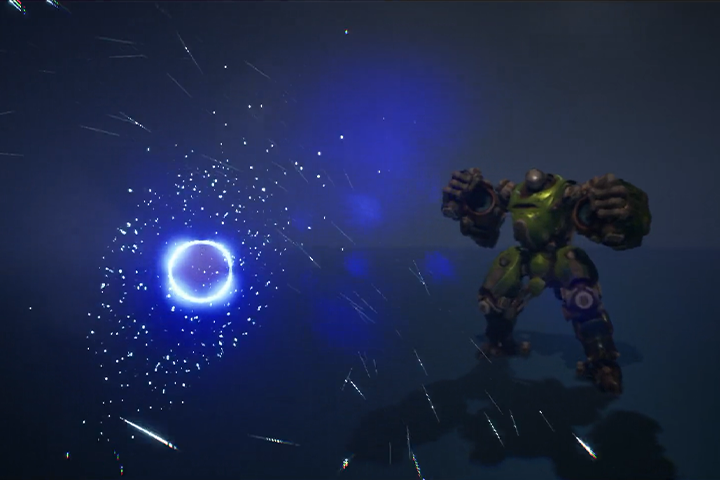
Professional-grade in-game VFX production with Niagara goes beyond simply placing emitters and modules. It involves a deep understanding of the particle system’s architecture and how to leverage its features for both visual fidelity and performance.
- Module Workflow Integration: Understanding the system’s characteristics, including pros and cons, is vital. This allows you to make informed decisions about module selection and combination, leading to more efficient and effective effect creation. The ability to structure your Niagara systems logically, from basic concepts to advanced applications, ensures scalability and ease of iteration.
- Optimized Asset Creation: The course emphasizes practical know-how in optimizing textures and creating FX-specific materials. This includes learning how to effectively use tools like Photoshop and 3ds Max for creating textures suitable for real-time effects, and how to design versatile master materials that can be easily modified through material instances.
- Practical Application & Portfolio Building: The curriculum focuses on building core in-game FX production skills through hands-on examples. This includes creating essential basic effects, understanding cinematic VFX production processes, and developing effects like shockwaves, energy balls, and sword trails. The emphasis is on acquiring practical knowledge that can be immediately applied to personal projects and professional portfolios, allowing you to create natural and colorful effects.
💬 Frequently Asked Questions
Q. How does Niagara compare to older particle systems like Cascade for game development?
VFX Artist Sungwoo Ryu explains that Niagara offers significantly more scalability and flexibility compared to Cascade. While Cascade can be challenging to program to your liking, Niagara’s module-based system and advanced features allow for greater control and optimization, making it the industry standard for creating complex, high-quality in-game effects.
Q. What are the most critical elements to focus on when learning Niagara for the first time as a VFX Artist?
VFX Artist Sungwoo Ryu advises aspiring artists to first grasp the fundamental concepts of Niagara’s module combination methods and system characteristics. Understanding the pros and cons of different modules and how they interact is paramount. This foundational knowledge enables immediate practical application and efficient effect creation without getting lost in complex coding.
Q. How can a VFX Artist effectively use the provided course materials for portfolio development?
VFX Artist Sungwoo Ryu designed the course with portfolio building in mind, providing 10 exercises and over 25 files. The advice is to actively use these materials to not only learn self-study methods for improving capabilities but also to construct unique portfolio pieces. This practical, hands-on approach ensures the developed effects are of professional quality and directly applicable to job market demands.
👉 Want to Go Deeper?
Discover the full curriculum and detailed breakdown of VFX Artist Sungwoo Ryu’s techniques.