🛠️ Key Skills & Details That Define Professional Quality
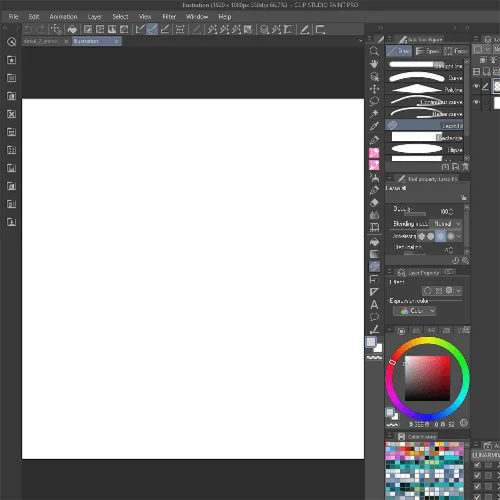
Translating theoretical knowledge into practical artistic output requires a keen eye for detail and efficient workflow. For character drawing, this involves not just understanding anatomy but also mastering brush control and pressure dynamics to convey movement and form. Professional artists often utilize tools like perspective rulers and 3D models within software like Clip Studio Paint to establish accurate structural foundations before diving into stylization.
Workflow efficiency is paramount. This means optimizing your workspace and leveraging custom brushes and tools to streamline repetitive tasks. For example, understanding how to quickly create dynamic poses or efficiently render fabric folds can significantly cut down production time while maintaining quality. The ability to depict real-life materials and clothing folds accurately, understanding how light and shadow play across different surfaces, is a hallmark of professional illustration. This level of detail ensures your characters not only look good but also feel tangible and believable within their environment.
💬 Frequently Asked Questions
Q. How can an Illustrator effectively use 3D models in character creation?
An Illustrator can leverage 3D models as a robust base for establishing accurate anatomy, proportions, and dynamic poses. Importing a 3D model into software like Clip Studio Paint allows for precise perspective setup and character positioning, which can then be traced and refined with digital brushes. This technique ensures structural integrity before stylistic elements are applied, leading to more grounded and visually coherent character designs.
Q. What are the key differences an Illustrator should focus on when depicting various materials and clothing folds?
An Illustrator should focus on how light interacts with different surfaces. For instance, the way light reflects off smooth, shiny metal will differ greatly from how it diffuses across soft fabric. Pay attention to the subtle changes in hue and value caused by material properties and the distinctive way fabric drapes and folds based on its weight and weave. Understanding these nuances is critical for creating realistic textures and believable clothing.
Q. How does an Illustrator guide the viewer’s eye for better storytelling in character illustrations?
An Illustrator guides the viewer’s eye through composition, contrast, and focal points. By strategically placing the character and its elements, an Illustrator can lead the audience’s gaze towards the most important aspects of the artwork. Using strong gestures, clear lighting that highlights key features, and carefully chosen props helps to establish mood and narrative, ensuring the character’s story is communicated effectively.