🛠️ Key Skills & Details That Define Professional Quality
 https://cdn.day1company.io/prod/uploads/202403/095517-465/bangkuart-portfolio-02.webp
To achieve professional-level realism, focus on these practical techniques:
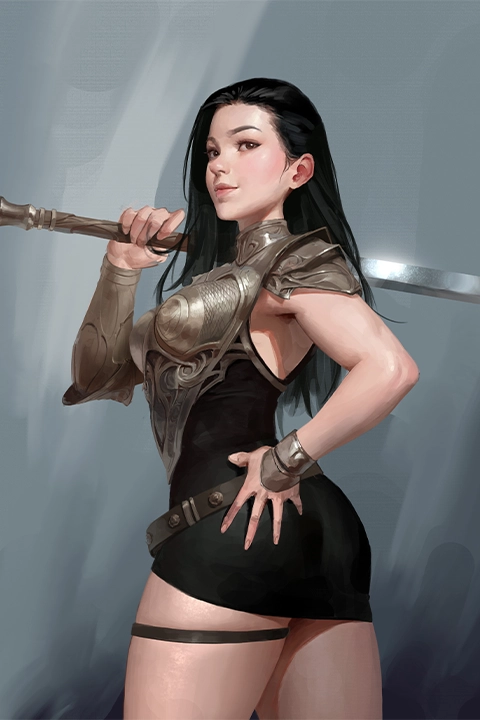
- Precise Sketching for Silhouette: Before diving into rendering, Bangku An stresses the importance of sketching the body’s core silhouette, even under armor. This ensures the armor design complements, rather than distorts, the underlying form. Techniques like using Ctrl+C, Ctrl+J to duplicate and refine layers are essential for iterating on the armor’s design while maintaining the character’s structure. Pay close attention to how armor pieces would realistically fit a female form, adjusting proportions for shoulders, arms, and chest.
- Value Study for Depth: Always consider the light source. Even in a monotone sketch, establishing clear light and shadow areas using values will guide your subsequent coloring. This means identifying highlights, mid-tones, core shadows, and cast shadows. For example, a crevice in a stone pillar or a dent in a motorcycle part should be rendered with accurate value shifts to convey its three-dimensional form convincingly.
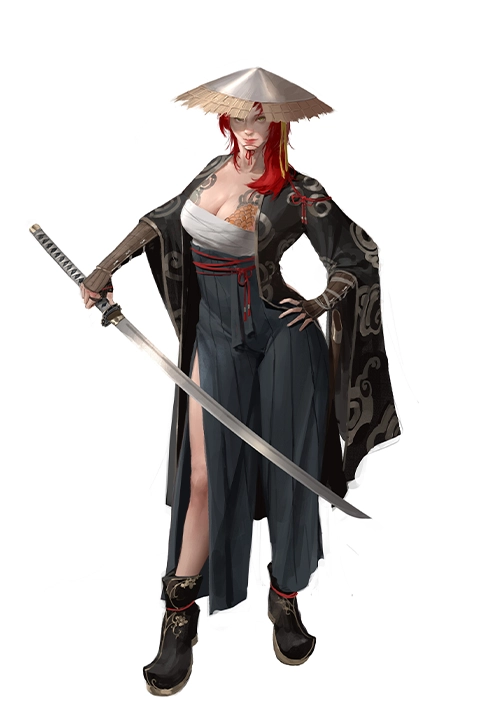
- Mastering Material Textures: Realism is built on texture. When coloring clothing, think about how fabric drapes, wrinkles, and catches light differently than skin or metal. Bangku An’s approach involves carefully observing these characteristics. For example, depicting the soft sheen of skin versus the harder, reflective surface of armor requires distinct brushwork and value application. Practicing these material studies will significantly enhance the overall believability of your characters.
💬 Frequently Asked Questions
Q. Illustrator Bangku An, how can I ensure my character sketches have a strong sense of mass?
A. Plan your sketch by considering the overall volume and form of the character from the beginning. Think of the character as a solid object with weight and dimension. Incorporate basic shapes and silhouette studies early on, even before adding facial features. This foundational understanding of mass will make subsequent detailing and coloring much more effective.
Q. Illustrator Bangku An, I struggle with making my character’s clothing look natural. What’s your advice?
A. The key is to remember that clothing is worn over the body. Always sketch the underlying body shape first, even if it’s a rough indication. Then, consider how the fabric will drape, fold, and create wrinkles based on the body’s form and the clothing’s material. Pay attention to how light and shadow fall on these folds to maintain a sense of volume and realism.
Q. Illustrator Bangku An, what’s the biggest mistake beginners make when trying to achieve realistic character expressions?
A. A common pitfall is focusing too much on isolated features without considering the overall anatomical structure and how light interacts with the form. Beginners often draw features like eyes or mouths without understanding their placement within the broader facial structure or how light and shadow define those forms. It’s essential to study the anatomy of the entire face and body, and practice value rendering to create a cohesive and realistic look.
👉 Want to Go Deeper?
Ready to transform your character illustrations from flat drawings to living, breathing portraits? Dive into Bangku An’s comprehensive workflow and unlock the secrets to lifelike realism.