🛠️ Key Skills & Details That Define Professional Quality
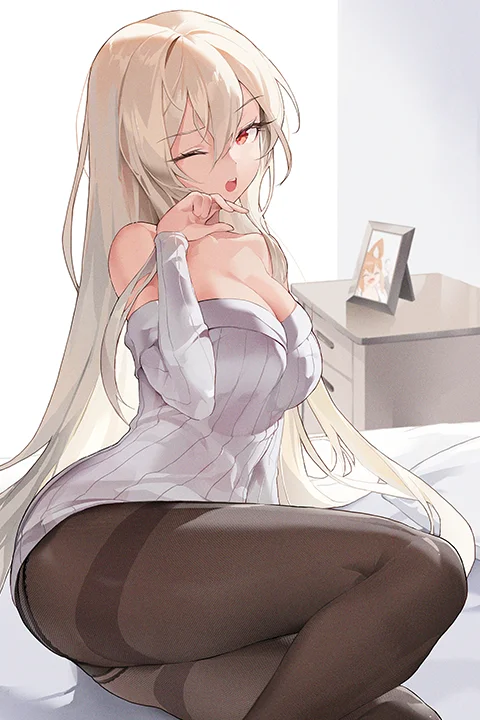
Choyeon’s approach highlights practical techniques that significantly impact the final output. Here’s a breakdown of what defines professional quality in character illustration:
- Hair Rendering: Instead of just defining the bottom grain of hair, meticulously render both top and bottom grains. Adding stray strands and layering highlights multiple times, with stronger colors in emphasized areas, creates a much richer and denser look. This detail-oriented approach is key to making hair look voluminous and dynamic.
- Material Differentiation: Recognize that different materials (like metal vs. fabric) require distinct rendering approaches. For metal, use strong contrast and reflections to convey its hardness. For fabric, focus on subtle folds and texture, adjusting contrast based on the material’s properties. Always consider an object’s thickness, even for thin items like chokers, to add realism.
- Skin Details & Lighting: When rendering skin, pay attention to areas like the armpits where folds naturally occur; express these by subtly breaking up the surface. Use highlights strategically on protruding areas of the body, like the chest, but avoid making skin look overly smooth. For shadowed skin, increasing saturation can enhance the sense of volume and form. Applying a slight reflective light with low saturation can also add depth without overwhelming the base color.
- Occlusion for Depth: Apply occlusion in small, moderately intense areas where surfaces meet (e.g., between body parts and clothing). This subtle darkening significantly enhances the perception of depth and separation between elements.
- Makeup & Character Consistency: When adding facial details like eye makeup or lip expressions, ensure they are consistent with the character’s age and setting. Over-emphasizing lips, for instance, can make a character appear older than intended.
💬 Frequently Asked Questions
Q. How can I make my illustrations look denser and more detailed without spending too much extra time?
A. Focus on breaking down complex elements like hair and fabric into smaller units. Choyeon recommends strategically zooming in to work on these details while keeping an overall view open to ensure cohesion. Applying layered highlights and subtle occlusion in key areas, rather than broad shading, is a time-efficient way to add significant depth and density.
Q. Illustrator Choyeon mentions using occlusion. What exactly is occlusion in illustration, and where should I apply it?
A. Occlusion refers to the darkening that occurs where two surfaces meet and block light from reaching each other. Illustrator Choyeon suggests applying it in small areas with moderate intensity, such as the armpit area where the torso meets the arm, or between overlapping clothing elements. This technique helps differentiate objects and add a sense of depth and realism without making the illustration appear murky.
Q. How can I use lighting to enhance my character illustrations, as suggested by Illustrator Choyeon?
A. Choyeon advises paying close attention to how light interacts with different materials and forms. For skin, highlights can be applied to protruding areas, and increased saturation can be used in shadowed areas. For metal objects, bold reflections and highlights convey their hardness. By carefully considering light sources and their impact on different surfaces, you can create a stronger sense of volume, mood, and visual appeal.