Mastering Human Anatomy: Insider Tips from Anatomy Artist Kota Kato
🧐 The Frustration of Inaccurate Anatomy
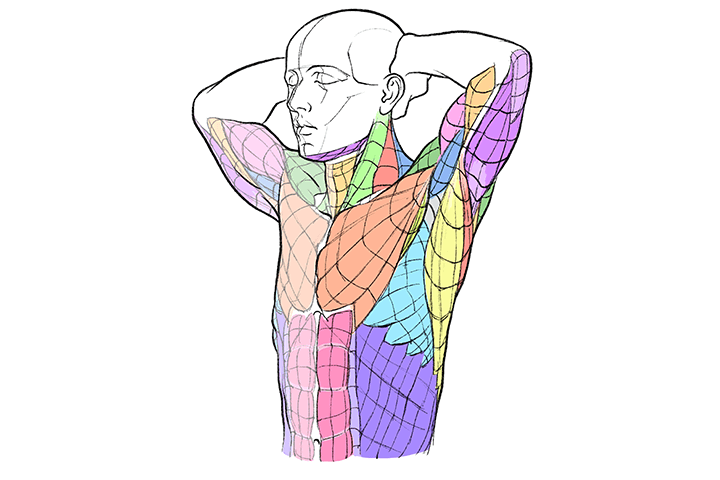
You’ve spent hours on a piece, meticulously rendering every detail, but something still feels off. The pose is stiff, the proportions are subtly wrong, and the overall impression lacks life. This is a common roadblock when artistic anatomy isn’t fully grasped. The good news? Mastering these fundamentals is more achievable than you might think, and it all starts with understanding the core principles.
💡 3 Core Principles for Flawless Anatomy
These insights from Anatomy Artist Kota Kato are game-changers for anyone looking to bring their figures to life.
1. Deconstruct to Understand: The Anatomyartist’s Approach to Bones
Anatomy Artist Kota Kato emphasizes that true mastery comes from understanding why the body looks the way it does. This means going beyond simply memorizing bone names and shapes.
- Focus on Function: Grasp how each bone connects and moves. For instance, understanding the shoulder joint’s range of motion is more crucial than just knowing the names of the clavicle and scapula in isolation.
- Surface Landmarks are Key: Learn to identify key bony landmarks visible on the body’s surface. This allows you to accurately place muscle masses and understand the underlying structure even without explicit anatomical references. Kato Kato’s method involves practicing identifying these points on reference images and even on oneself.
- Skeleton as a Blueprint: View the skeleton not just as a static structure, but as the foundation for all movement and form. Practicing drawing simplified skeletons in various poses (like walking or jumping) helps solidify this understanding, as shown in the class’s extensive exercises.
2. Muscles: Beyond the Surface Layer
Understanding muscles is about recognizing their origins, insertions, and how they affect the body’s surface form.
- Layered Approach: Learn to see muscles not as flat shapes, but as forms that overlap and attach to bones. Kato Kato’s curriculum breaks this down systematically, starting with major muscle groups and then detailing their interplay.
- Visualize Bulk and Attachment: Focus on the overall volume and how muscles attach to the skeleton. This helps in correctly rendering form and movement, rather than just drawing outlines. The class provides over 20 drawing exercises to practice this visualization.
- Contextual Anatomy: Understand how specific muscles contribute to common poses and expressions. Analyzing famous artworks, as the course does, demonstrates how artists historically and successfully applied anatomical knowledge to convey emotion and dynamism.
3. The Art of Surface Anatomy: Capturing Subtle Forms
Body surface anatomy is where bones and muscles translate into the visual forms we see.
- Connecting Surface to Structure: This is where the understanding of underlying bones and muscles truly pays off. Learn to interpret the subtle undulations and forms on the skin’s surface as direct indicators of what lies beneath.
- Practice with Real-World References: The course includes detailed breakdowns of how to observe and render surface anatomy on diverse body types and poses. This practical application is vital for developing a discerning eye.
- From General to Specific: Start with major surface landmarks like the rib cage or the iliac crest, then move to finer details like veins or muscle bellies. This systematic approach prevents overwhelm and builds a strong foundation.
🛠️ Key Skills & Details That Define Professional Quality
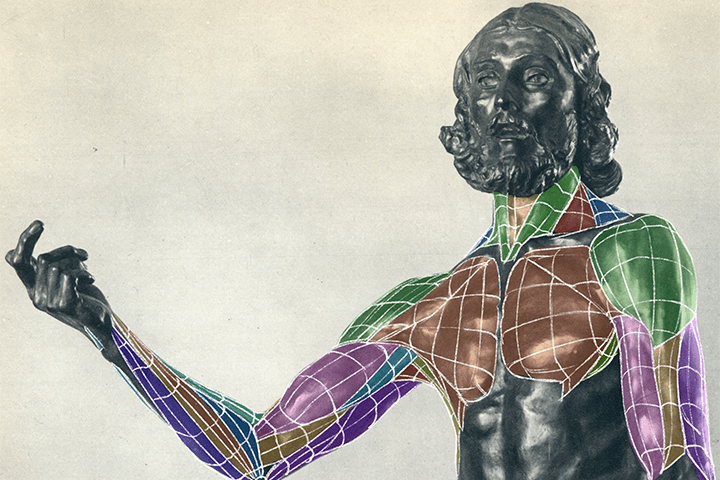
Anatomy Artist Kota Kato’s teaching philosophy is deeply rooted in practical application and transferable skills. The core of their method isn’t just about knowing the anatomy; it’s about how to see and translate that knowledge into compelling artwork.
- Observational Acuity: Develop the ability to “see” the underlying structure through the skin. This involves understanding how fat distribution, skin tension, and muscle mass create the surface forms. Practicing quick observational sketches of the body from various angles is crucial.
- Form Simplification: Professionals often simplify complex anatomical structures for clarity and efficiency in their workflow. The class demonstrates techniques for reducing complex bone and muscle groups into manageable, recognizable forms suitable for illustration, character design, or animation rigging.
- Dynamic Analysis: Learn to analyze how anatomical structures change with movement and pose. This involves understanding joint articulation and muscle contraction, which are critical for creating dynamic and believable figures. The course’s analysis of famous artworks provides excellent case studies for this.
- Connecting Knowledge to Art: The ultimate goal is to integrate anatomical understanding into your artistic decision-making. This means using anatomy not just for accuracy, but to enhance expression, storytelling, and the overall emotional impact of your work. For instance, understanding how the torso’s muscles create specific curves can inform how you depict a character’s posture to convey strength or vulnerability.
💬 Frequently Asked Questions
Q. How can Anatomy Artist Kota Kato’s class help someone who struggles with drawing dynamic poses?
Anatomy Artist Kota Kato’s class directly addresses this by breaking down the body into its fundamental components – bones, joints, and muscles – and explaining how they interact during movement. By understanding the mechanics of poses, students can move beyond static references and create more fluid, naturalistic figures. The class’s emphasis on surface anatomy also helps in correctly interpreting how muscles and bones affect the visible form during dynamic actions.
Q. What’s the most practical takeaway from this course for a beginner illustrator?
For a beginner, the most practical takeaway is likely the systematic approach to learning anatomy. Anatomy Artist Kota Kato demystifies the subject by starting with foundational concepts and building complexity gradually. The consistent use of drawing-type class materials and exercises allows beginners to immediately apply what they learn, reinforcing memory and understanding through active participation, rather than passive observation.
Q. Can the skills learned in this class be applied to 3D modeling or character design?
Absolutely. While the class focuses on traditional drawing and illustration principles, the core understanding of human anatomy is universal across disciplines. Knowledge of bone structure, muscle mass, and surface form is essential for creating believable 3D models, designing characters with accurate proportions, and even rigging for animation. The principles taught by Anatomy Artist Kota Kato provide a solid foundation that translates directly to these fields.