💡 Three Pillars for Narrative Environment Design
This approach breaks down the complex process into actionable steps, focusing on how to infuse your scenes with meaning and emotion.
1. Idea Genesis: Beyond the Blank Canvas
The most crucial step happens long before you draw a single line. It’s about building a robust foundation for your narrative. This involves deep dives into brainstorming techniques, reference gathering, and meticulously crafting a mood board. Think of it as planning an unforgettable trip: the excitement of the destination is amplified by thoughtful preparation. This isn’t just about finding cool images; it’s about understanding the why behind your environment’s existence.
2. Structural Integrity & Line Quality
Before color, before detail, comes form. A quick but thorough review of perspective, volume, and structure is essential. Thumbnailing is your playground for first drafts, where you explore different compositions and focal points. Pay close attention to line quality; it’s not just about outlining shapes but about conveying weight, depth, and energy. Different line weights and styles can dynamically enhance the narrative and guide the viewer’s eye through the scene.
3. Color and Light as Storytellers
Color and lighting are the final, yet arguably most powerful, tools for storytelling. They don’t just fill the scene; they enhance its structure, set the mood, and communicate emotion. Exploring the infinite opportunities color offers can add layers to your narrative, define the space, and evoke specific feelings. Mastering how color and light interact to complement the scene’s design is key to creating a truly immersive experience.
🛠️ Key Skills & Details That Define Professional Quality
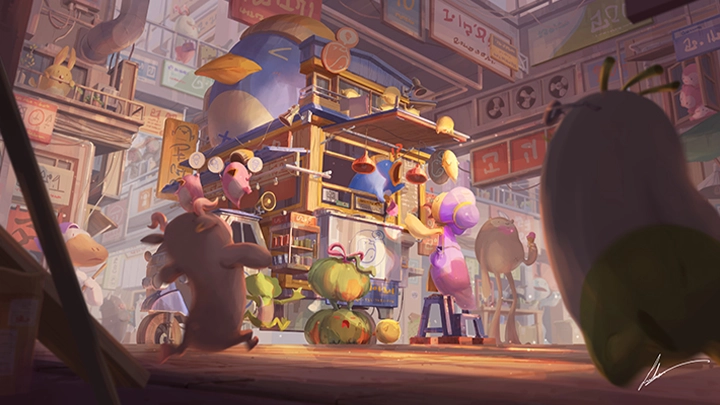 Translating the narrative intent into a visually compelling environment requires a blend of fundamental skills and a keen eye for detail. This goes beyond simply knowing software functions; it’s about the practical application that elevates your work.
- Linework as a Narrative Tool: Understanding how varying line weights and styles can emphasize depth, form, and focal points. This includes using lines not just for definition but to suggest texture, movement, and atmospheric conditions.
- Color Harmony and Mood Setting: Developing an instinct for selecting color palettes that not only look appealing but actively contribute to the story’s emotional tone. This involves understanding color theory’s impact on perception and how to use it to guide the viewer’s emotional response.
- Value Structure for Depth: Utilizing value studies to establish a clear sense of light, shadow, and form. A strong value foundation ensures that your environment reads well, even in grayscale, and provides a solid base for color application.
- Detailing for Immersion: Strategically placing details that hint at the environment’s history, inhabitants, or purpose. These subtle cues are what make an environment feel lived-in and rich with backstory, even without explicit exposition.
- Rendering for Believability: Applying rendering techniques to create believable textures, materials, and lighting. This involves understanding how light interacts with different surfaces and using brushwork and blending to achieve a polished, professional finish.
💬 Frequently Asked Questions
Q. How can an Illustrator effectively brainstorm ideas for a new environment illustration?
A. Start by defining the core story or emotion you want to convey. Then, gather diverse references that align with this theme, not just visually but also conceptually. Create a mood board that acts as a visual compass, guiding your subsequent design decisions and ensuring narrative consistency.
Q. What is the most important aspect of line quality for environment illustration?
A. The most important aspect is its ability to guide the viewer’s eye and define form. Using a variety of line weights and styles can create a sense of depth, suggest texture, and emphasize focal points, all of which are critical for a compelling narrative environment.
Q. How can an Illustrator use color to enhance the storytelling in their environment artwork?
A. Illustrators can use color to establish the mood, time of day, or even the emotional state of characters associated with the environment. Strategic color choices can draw attention to specific elements, create contrast, and add a symbolic layer to the narrative.