Mastering Scene Composition: Pro Tips from Luhan Wang & Yaoyao Ma Van As
🧐 Why Do My Scenes Feel Flat Despite Following the Steps?
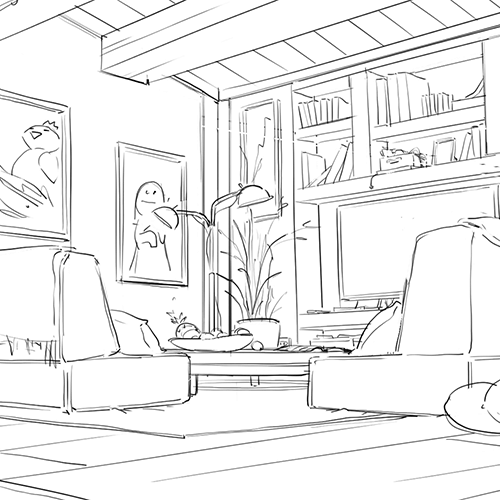 It’s a common frustration: you meticulously follow tutorials, but your illustrations still lack that professional depth and impact. Often, the missing piece isn’t a complex technique, but a subtle shift in how you approach fundamental elements like perspective and value. This course dives deep into transforming your scene creation process, from initial concept to final polish.
💡 Three Pillars for Stunning Scene Illustration
1. <>
Perspective isn’t just about drawing straight lines; it’s about understanding how we perceive depth and volume. This class emphasizes mastering one-point, two-point, and three-point perspectives, not as rigid rules, but as tools to build believable worlds. The key insight here is to move beyond simply calculating vanishing points to truly feeling the space and how objects interact within it. This unlocks countless possibilities for unique artworks and styles.
2. <>
Illustrator Luhan Wang often moves directly from sketching to painting, but this course breaks down the crucial line art process for clarity. A pro’s routine involves more than just drawing; it’s about efficient organization. Understanding how to integrate simple and complex objects, maintaining their scale and perspective, is vital. The trick is to observe how elements relate in real-world spaces and translate that understanding onto your canvas.
3. <>
The difference between a good illustration and a great one often lies in the manipulation of values and lighting. This class details how to use color, light, and shadow not just to render forms, but to convey mood and story. Pay close attention to how slight changes in lighting can drastically alter the atmosphere. Mastering this allows you to direct the viewer’s eye and amplify the narrative within your piece.
🛠️ Key Skills & Details That Define Professional Quality
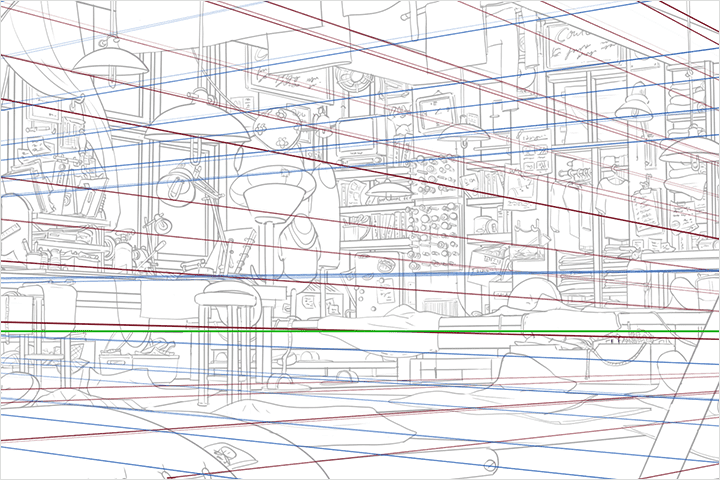
This course emphasizes practical application over abstract theory. You’ll learn how to:
- Control Line Weight and Quality: Discover how different line styles impact the final render, from crisp clean-up passes to expressive rough sketches. This includes understanding how line work guides the viewer’s eye and defines form.
- Build Believable Spaces: Learn to construct environments by first establishing a solid perspective grid. This involves accurately placing horizon lines and vanishing points, then developing basic shapes into complex structures that feel grounded in reality.
- Master Color and Lighting Dynamics: Explore how to use color palettes and lighting scenarios to evoke specific moods and emotions. This includes understanding pre-lit color schemes, adding various light sources, and using reflections and shadows to enhance depth.
- Strategic Composition: Develop thumbnails to experiment with different compositions, utilizing principles like the rule of thirds and managing visual flow to create dynamic and engaging scenes that tell a story.
💬 Frequently Asked Questions
Q. How does learning perspective help an illustrator tell a story?
A. Perspective provides a sense of depth and spatial relationship between objects. By mastering it, illustrators can create more believable and immersive environments, allowing them to effectively guide the viewer’s eye and communicate the intended mood, narrative, and emotional tone of the scene.
Q. What is the most efficient way to integrate multiple objects into a scene while maintaining consistency?
A. The core strategy is to understand the underlying perspective grid and the scale of each object relative to that grid and other elements. This involves careful observation of real-world object relationships and consistently applying perspective principles during the sketching and blocking phases. Using references for specific object shapes and how they interact in space is also crucial.
Q. How can I make my illustrations feel more finished and polished?
A. Achieving a polished look often comes down to the final stages of rendering, specifically value and lighting passes. After establishing clean lines and base colors, carefully consider how light interacts with surfaces to create form, shadow, and mood. Small details in highlights and ambient occlusion can significantly enhance the perceived quality and completeness of an illustration.