Atmospheric Illustrations: Mastering Light, Color, and Composition
🧐 When Your Illustrations Lack That “Wow” Factor
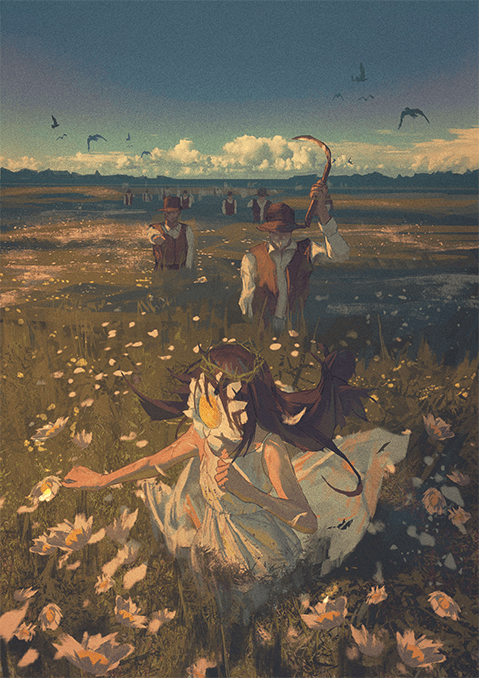 You’ve meticulously rendered every detail, but the final piece still feels flat, lacking the depth and emotion you envisioned. The issue often isn’t a lack of skill, but a misunderstanding of how core visual elements work together to tell a story.
💡 Neg’s Core Techniques for Evocative Storytelling Art
1. Building Depth with Light and Shade
The difference between a flat drawing and a three-dimensional scene lies in how light interacts with form. It’s not just about adding shadows; it’s about understanding the properties of light, its sources, and how reflections sculpt surfaces. This knowledge allows you to accurately model textures, from the sheen of metal to the ripple of water.
- Key Insight: Mastering light and shade isn’t just about technique; it’s about thinking of your illustration as a staged scene, with light as your primary storyteller.
2. Streamlining Your Workflow with Photographic References
Integrating photographs can dramatically enhance your work’s quality and speed up the creation process, especially for backgrounds. Instead of painstakingly recreating complex environments, learn how to strategically blend photographic elements into your illustrations. This approach frees up mental energy to focus on character and narrative.
- Workflow Hack: Utilize reference photos not just for accuracy, but as a springboard for inspiration, helping to generate new ideas and compositions.
3. The Power of Tone and Dominant Colors
The emotional impact of an illustration is heavily influenced by its tone and dominant colors. Understanding how color evokes emotion is crucial. Learning to analyze and apply dominant colors intentionally allows you to guide the viewer’s feelings and ensure a cohesive mood throughout your piece.
🛠️ Key Skills & Details That Define Professional Quality
To truly make illustrations pop, dive deep into how fundamental theories translate into tangible skills. This involves more than just knowing software tools; it’s about the nuanced application of principles.
- Perspective Mastery: Go beyond basic vanishing points. Understand how to construct convincing 3D space, even when placing multiple figures within a single scene. This applies whether you’re drawing a bustling cityscape or an intimate interior.
- Controlled Lighting for Narrative: Use light not just for illumination, but as a directorial tool. Learn to control the viewer’s gaze and establish a compelling atmosphere by understanding camera angles and the subtle effects of different light sources. This deliberate use of light can pull viewers into the story.
- Compositional Impact: Analyze how elements like camera angles, tone, and dominant colors combine to create dynamic and engaging compositions. By breaking down successful illustrations, you’ll learn to proactively build these components into your own work, from initial sketch to final polish.
💬 Frequently Asked Questions
Q. How can an Illustrator overcome artist’s block?
An Illustrator can overcome artist’s block by actively seeking inspiration not from pure imagination, but from combining elements observed in past works and everyday life. The process involves analyzing existing compositions and motifs, then systematically expanding on these foundational ideas.
Q. What’s the most effective way for an Illustrator to express three-dimensionality in their art?
For an Illustrator, expressing three-dimensionality is best achieved through a combination of perspective drawing and skillful application of light and shade. Understanding how light interacts with forms allows for accurate modeling, bringing depth and volume to objects and characters.
Q. How can an Illustrator effectively use photographs in their work?
An Illustrator can leverage photographs as powerful tools to enhance work quality and streamline the creative process, particularly for background elements. By learning to blend photographic assets seamlessly into illustrations, artists can create more realistic environments without sacrificing their unique artistic style.