Mastering Anatomy: Illustrator Jeonghyun Seok’s Core Techniques for Realistic Figures
🧐 When Your Figure Drawings Feel Lifeless and Stiff
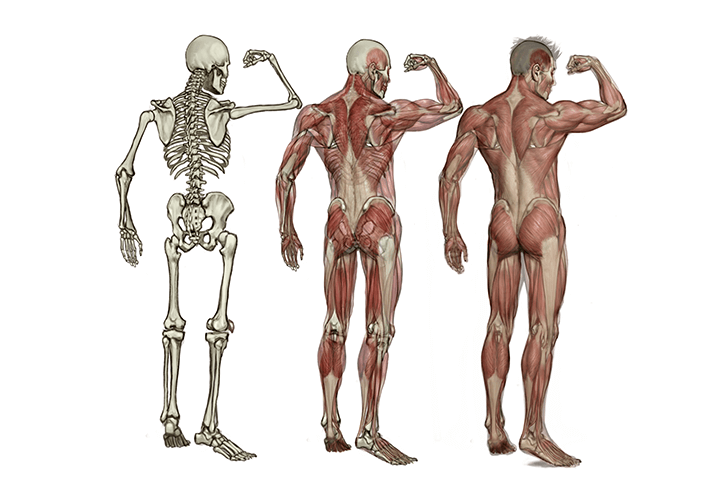 It’s a common hurdle: you meticulously follow anatomy guides, yet the resulting figure still lacks that essential sense of life and flow. The issue often lies not in a lack of knowledge, but in how that knowledge is applied. This happens when the fundamental connection between skeletal structure, muscle movement, and dynamic posing is missed.
💡 3 Key Principles for Dynamic Figure Drawing
1. Grasping the Flow: Beyond Static Anatomy
The human body isn’t a collection of separate parts; it’s a cohesive system. Understanding the interconnectedness of the spine, rib cage, and pelvis is crucial. This isn’t just about knowing bone names, but about visualizing how they articulate and influence the overall posture and movement. Think of the torso as the central hub that dictates the pose of the limbs.
2. Building from the Skeleton: The Foundation of Believability
Before rendering muscles, nail the skeletal structure. This means understanding not just the major bones but also their subtle curves and how they create the core framework. Focus on accurately depicting the vertebral column and the hips, as they are the primary drivers of torso movement and stability.
3. The Art of Muscle Layering: Adding Depth and Form
Once the skeleton is established, layering muscles becomes intuitive. Don’t just draw muscle shapes; consider their origin and insertion points on the bones. This helps define the form and volume of the body accurately. For example, understanding how the chest and back muscles connect to the arm allows for more natural arm movements.
🛠️ Key Skills & Details That Define Professional Quality

To achieve professional-level figure drawing, mastering specific techniques is paramount. This involves a deep dive into how artistic anatomy translates into compelling visuals:
- Skeleton as the Core Framework: Learn to accurately construct the torso by focusing on the spine, rib cage, and hips. Understanding their profile and half-profile views is essential for creating believable depth and form.
- Arm and Leg Articulation: Detailed study of the arm and leg bones, including the shoulder and pelvic girdles, is key. This knowledge directly informs how you depict the range of motion and the subtle curves created by underlying muscles.
- Muscle Groups and Their Functions: Differentiate between major muscle groups like the thighs, hamstrings, and calves, and understand their role in creating natural poses and movements. This also extends to the arms, from the upper arm muscles to those controlling the hands.
- Expressing Movement and Detail: Focus on capturing the dynamic flow of the human body, especially in areas like the arms, legs, hands, and feet where most movement occurs. This includes rendering the realistic appearance of veins and understanding the nuances of facial expressions.
- Background Integration: Learn how to create backgrounds that complement the character, using perspective and composition to add realism and depth to the overall illustration.
💬 Frequently Asked Questions
Q. How can an Illustrator effectively use anatomical knowledge for character design?
A. Focus on understanding how skeletal structure and muscle groups influence the body’s overall form and movement. Instead of just drawing shapes, visualize the underlying framework. This allows for more dynamic and believable poses, ensuring characters feel grounded and lifelike, not stiff.
Q. What’s the most crucial tip for an Illustrator struggling with realistic human proportions?
A. Prioritize the foundational skeletal structure first. Accurately placing the spine, rib cage, and hips establishes the correct torso proportions. Then, build upon this by understanding the relative lengths and positions of the limbs, considering gender and body types. This systematic approach prevents common errors in proportion.
Q. As an Illustrator, what’s a practical tip for making digital figure drawings feel more dynamic?
A. Pay close attention to the interplay between bones and muscles. Understand how muscles attach to bones and how their movement affects the surface form. For instance, when drawing the torso, consider the layers of abdominal and flank muscles that enable bending and twisting. This layered approach brings depth and realism to digital art.